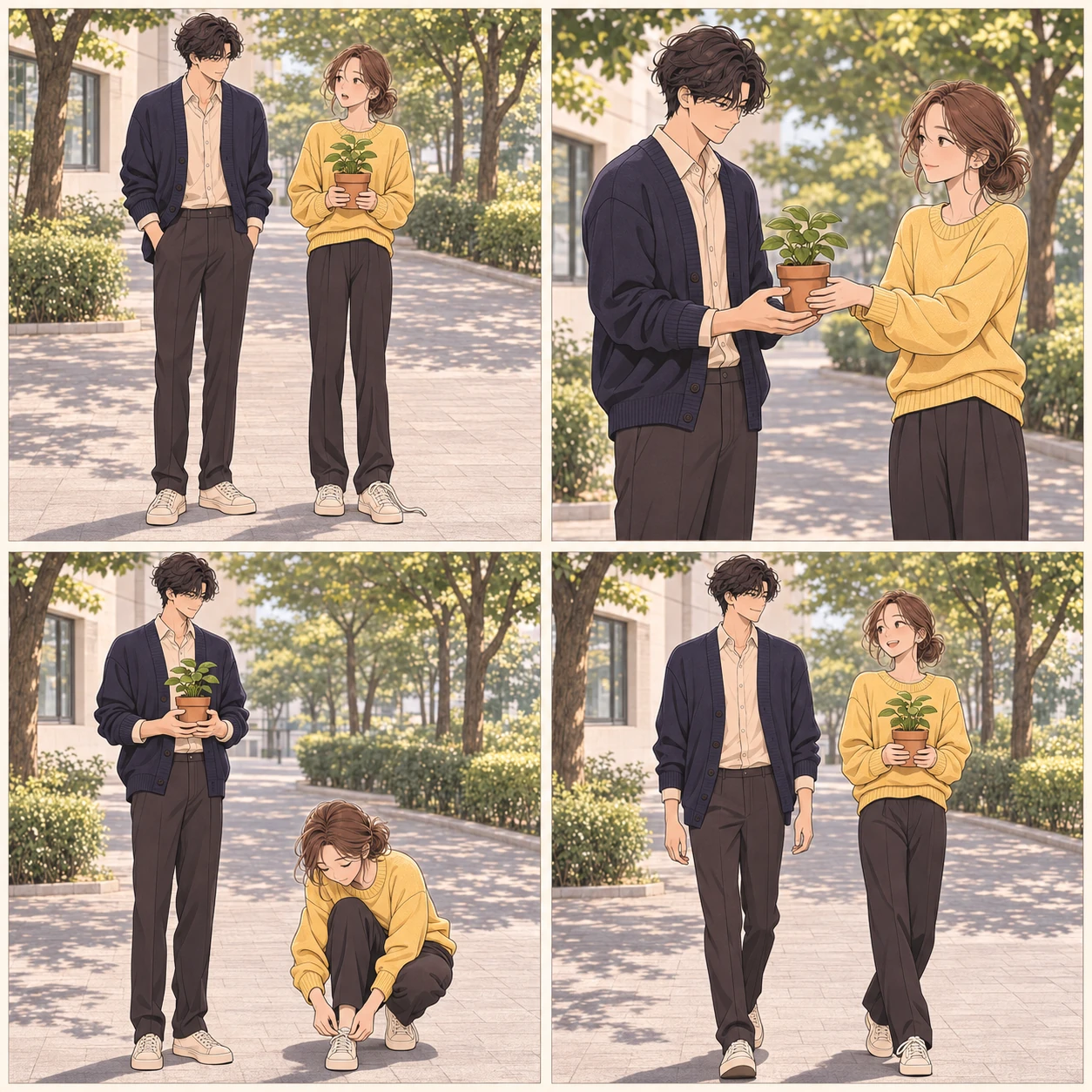
All Jin did was briefly hold Ara's small plant pot. Ara said what help she wanted, and Jin agreed to hold it while she tied her shoelace. Once the lace was tied and Ara took her pot back, the help was complete. This modern fiction considers a small action within one's own time and strength; it does not mean always having to help or expecting repayment afterward.
A modern interpretation for this story
A question to take with you
Within a limit that works for me, what is one small task I could lend a hand with?
Please include the source link when sharing.
If it stayed with you, support us with a follow.
Visit one of Park Seoyeon's channels. If you enjoy a post, a like or a comment is welcome too.
Park Seoyeon is an AI-created fictional character. Visiting, signing up and following are optional. They are never required to read.
Sukkah 49b:9–11 is a group of religious teachings comparing charity and acts of kindness. In section 9, Rabbi Elazar ranks charity above offerings and kindness above charity, using sowing and reaping as a comparison. Section 10 says charity's heavenly reward depends on its kindness and consideration, not just its amount. In section 11, the Sages describe three distinctions: charity uses money and serves the poor and the living; kindness can use one's person and money and serve the poor and rich, living and dead. The wisdom line paraphrases the bodily action aspect of section 11, rather than quoting it directly. Jin, Ara, the small pot, shoelace, request, agreement, dialogue and ending are AI-assisted modern fiction. The source's rankings and heavenly reward are not turned into personal moral scores, guaranteed repayment, wealth or health, or a duty of unlimited sacrifice. Briefly holding the pot within freely agreed limits is a separate modern interpretation.