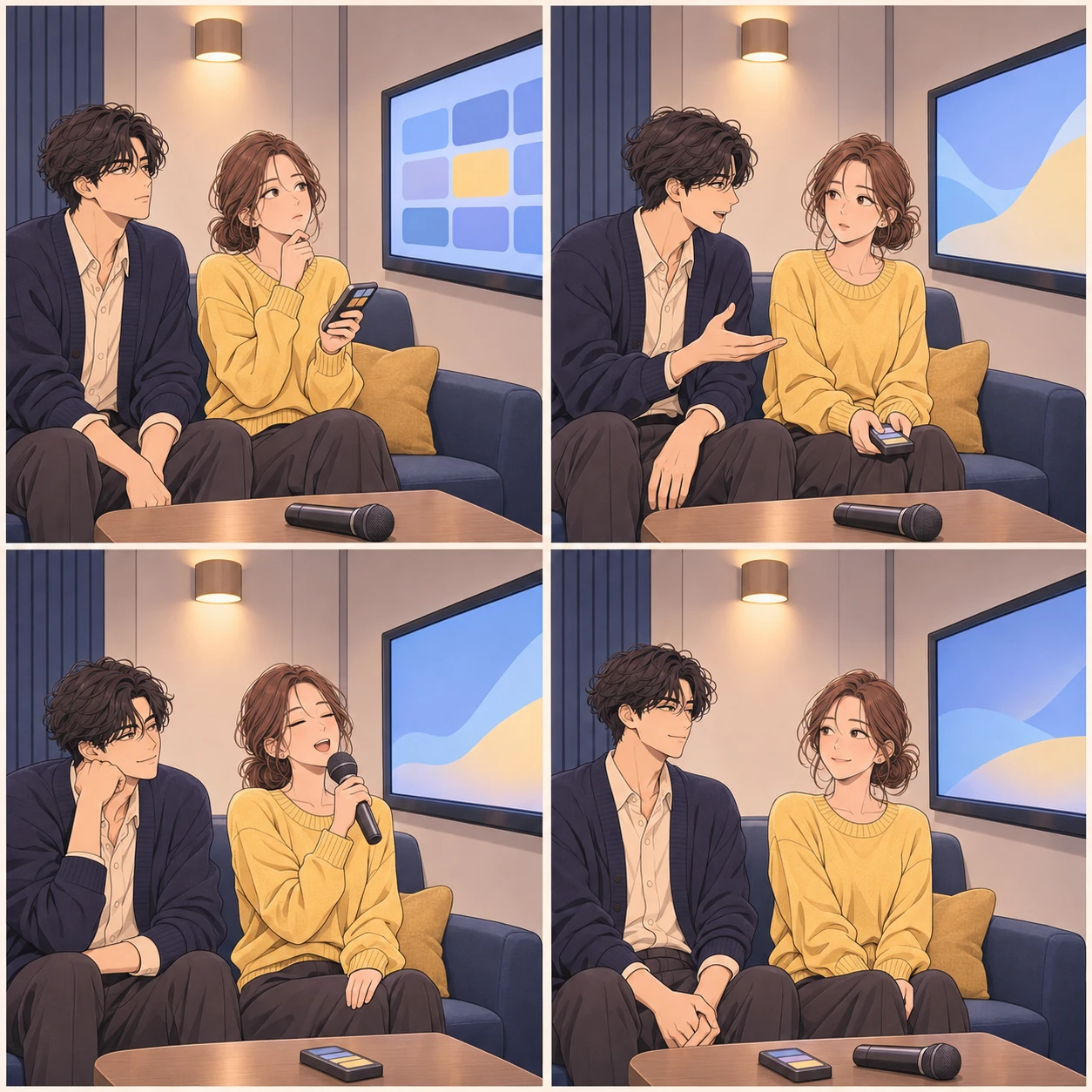
Ara was looking for a song that might earn a good karaoke score. When Jin asked what she wanted to sing, she remembered a song she loved. She chose that one herself and sang it through: that is this story's small ending. This is a modern choice to consider what she enjoys, not a demand to sing well or perform for someone else.
A modern interpretation for this story
A question to take with you
What small action could follow from remembering why I came here today?
Please include the source link when sharing.
If it stayed with you, support us with a follow.
Visit one of Park Seoyeon's channels. If you enjoy a post, a like or a comment is welcome too.
Park Seoyeon is an AI-created fictional character. Visiting, signing up and following are optional. They are never required to read.
Sukkah 53a:3 preserves sayings attributed to Hillel the Elder at the Temple's water-drawing celebration. The opening first-person statement cannot simply be treated as personal boasting. Rashi reads it as speaking on behalf of the divine presence; the preserved William Davidson English edition adds an explanation about each person's religious obligations. Tosafot discusses a different reading as well as Rashi's, but identifies the later invitation to 'My house' with the divine presence. The passage also describes feet going toward a beloved place, then cites Exodus 20:21 in a religious context of visiting the Temple and God's coming and blessing. The wisdom line paraphrases the beloved-place image; it is not a direct quotation. Considering why one came and choosing a song is a separate modern interpretation. Jin, Ara, the karaoke room, song choice, singing, dialogue and ending are AI-assisted fiction. The Temple, divine presence and blessing are not turned into personal arrogance, guarantees of self-improvement, skill, happiness or success, or obligations to attend gatherings or sing. No actual song or lyrics are used.