A Little WisdomTalmud stories for everyday life
← All stories

091 · 12 panels

A Wish Said Again

He explained what he meant, then chose new words for the person hearing them.

Inspired by a source · Creative adaptationNo sign-up · All stories free
Read at your own pace.
A book, one microphone and her own opening note lay ready.
Story

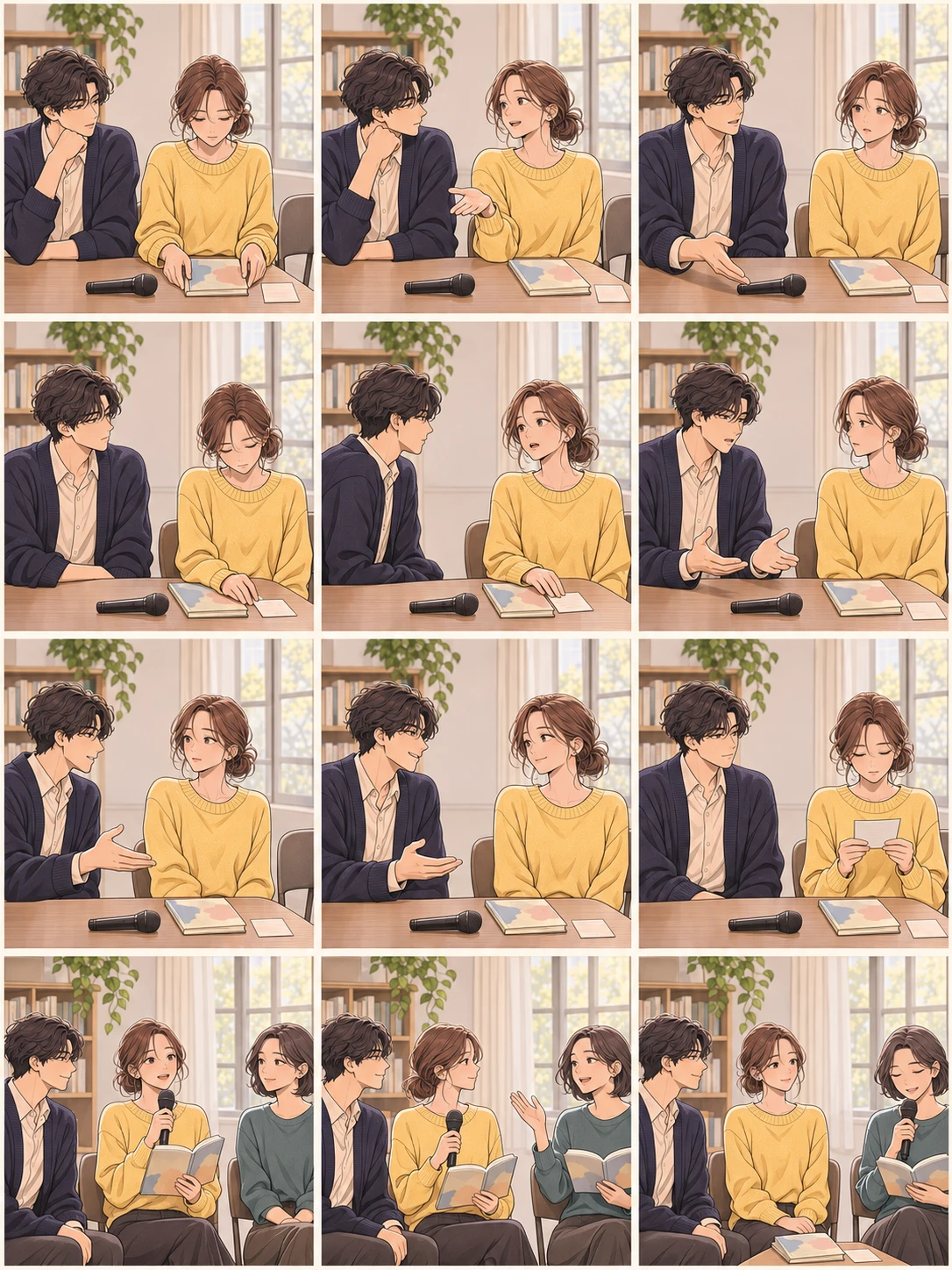
Before a small reading circle, Ara prepared to host for the first time.

A book, one microphone and her own opening note lay ready.

Ara freely asked the friend who had come with her for what she wanted.
Ara

Before we start, could you give me a little encouragement?

Ara freely asked the friend who had come with her for what she wanted.

Jin imagined several voices, but did not put his wish plainly.
Jin

I hope the microphone leaves your hands often today.

Jin imagined several voices, but did not put his wish plainly.

She heard it as wanting her to speak less, and felt a little hurt.
Story

Ara set her prepared note down for a moment.

She heard it as wanting her to speak less, and felt a little hurt.

Rather than settle on a guess alone, she told the friend who had said it.
Ara

I heard that as saying I should speak less. That stung a bit.

Rather than settle on a guess alone, she told the friend who had said it.

Alongside his intended encouragement, Jin considered what Ara had actually heard.
Jin

I see how it landed. Sorry. I didn't choose my words well.

Alongside his intended encouragement, Jin considered what Ara had actually heard.

He explained that he wanted people who wished to speak to join voluntarily.
Jin

I hoped to hear other willing voices sharing alongside yours.

He explained that he wanted people who wished to speak to join voluntarily.

This time, his expression did not sound like leaving someone's words out.
Jin

I hope the words you want to share and other people's words can both be heard.

This time, his expression did not sound like leaving someone's words out.

Ara picked up her note again and chose one opening she wanted to share.
Ara

I like that. I'll choose my own opening and begin.

Ara picked up her note again and chose one opening she wanted to share.

When the circle began, Ara actually said the words she had chosen.
Ara

I'd like to share one scene from this book that stayed with me.

When the circle began, Ara actually said the words she had chosen.

The adult participant chose something to share and freely raised a hand.
Colleague

May I read the passage I chose, too?

The adult participant chose something to share and freely raised a hand.

The encouragement had been reworded, and each person's chosen words continued in turn.
Story

After Ara spoke, the participant who had raised a hand began to read.

The encouragement had been reworded, and each person's chosen words continued in turn.

A thought from the Talmud

Shimon ben Yohai interprets the words his son reports as blessings for his family's survival and a long life.

The source idea in our own words · Not a direct quotation

Moed Katan 9b:4–7 · Read the source ↗

A lesson for today

Jin explained his encouraging intent while accepting that Ara had heard his words as wanting her to speak less, and he apologized. Ara stated her hurt directly; Jin offered a new, plain encouragement. In the original, a father interprets unfamiliar words as blessings. These modern friends instead consider the actual effect of the words and revise the expression. A speaker's status or intention alone does not erase another person's discomfort.

A modern interpretation for this story

A question to take with you

If words meant as encouragement hurt someone, how could I express them again?

Please include the source link when sharing.

If it stayed with you, support us with a follow.

Visit one of Park Seoyeon's channels. If you enjoy a post, a like or a comment is welcome too.

Park Seoyeon is an AI-created fictional character.
Visiting, signing up and following are optional. They are never required to read.

About the source and this adaptation

Moed Katan 9b:4–7 belongs to one visit and blessing beginning at 9a:20. Shimon ben Yohai sends his son to the scholars Yonatan ben Asmai and Yehuda, son of converts, for a blessing. Their wish invokes God's will and uses ominous language about unreaped crops, opposing arrivals and departures, a ruined house but occupied lodging, a disorderly table, and seeing no new year. The son reports feeling hurt. His father interprets these as children, sons-in-law and a wife not dying; long earthly life rather than the grave; many children; and no new marriage year following his wife's death. This reflects ancient family, gender, marriage and fertility values with death and economic imagery, not a report that the outcomes actually occurred. Sections 8–9 concern a separate blessing of Shimon ben Halafta and Rav, which we do not use. The wisdom line paraphrases the father's interpretation; it is not a direct quotation. The modern story separately has the speaker acknowledge hurt and change his words. Jin, Ara, the adult participant, reading circle, microphone, encouragement, apology, dialogue and ending are AI-assisted fiction. It does not recommend insults or curses, require uncomfortable words to be read as kind, demand obedience to authority, or guarantee health, wealth or childbirth.
Read the source ↗

AI-generated artwork · Creative adaptation

For your next little pause

Putting the Penalty Card Down →