A Little WisdomTalmud stories for everyday life
← All stories

092 · 12 panels

Putting the Penalty Card Down

They stopped pressing after a refusal and changed how to play together.

Inspired by a source · Creative adaptationNo sign-up · All stories free
Read at your own pace.
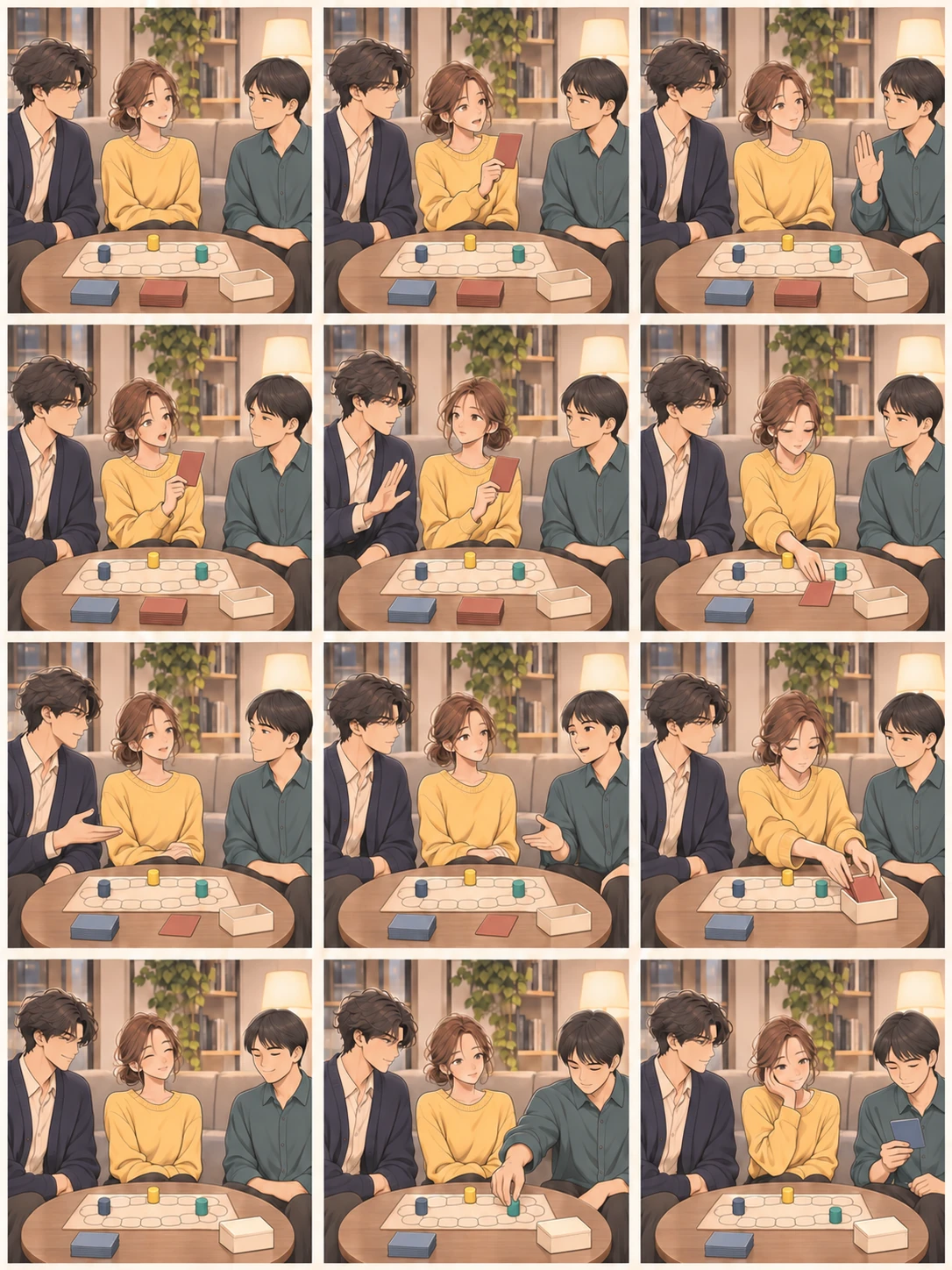
On a relaxed evening together, they set out the board and cards.
Story

The three began a small board game.

On a relaxed evening together, they set out the board and cards.

After a turn, Ara held up a penalty card.
Ara

This card asks for a short imitation.

After a turn, Ara held up a penalty card.

The coworker clearly said which activity they did not want.
Colleague

I don't want to do an imitation.

The coworker clearly said which activity they did not want.

Although she had heard the refusal, Ara asked again.
Ara

How about just one really short one?

Although she had heard the refusal, Ara asked again.

Jin did not wait for the coworker to explain again.
Jin

They said no. Let's stop asking them to do this.

Jin did not wait for the coworker to explain again.

Ara put the penalty card down on the table.
Ara

I kept asking after you said no. I won't make you do it.

Ara put the penalty card down on the table.

He asked the coworker to choose what came next.
Jin

Would you like to keep playing, or take a break here?

He asked the coworker to choose what came next.

The coworker chose their own condition for resuming.
Colleague

I'd like to keep playing together, without the imitation penalty.

The coworker chose their own condition for resuming.

She put the whole penalty stack in a small box rather than just covering one card.
Story

Ara removed the penalty cards from the game.

She put the whole penalty stack in a small box rather than just covering one card.

Jin agreed too, and the three prepared the next turn with the change in place.
Ara

All right. No penalties. Let's carry on moving our pieces.

Jin agreed too, and the three prepared the next turn with the change in place.

The coworker moved their own teal piece.
Colleague

Then I'll move my piece here.

The coworker moved their own teal piece.

The unwanted imitation ended, and the coworker's chosen participation became actual play.
Story

The three continued the next turn without penalties.

The unwanted imitation ended, and the coworker's chosen participation became actual play.

A thought from the Talmud

The maidservant declared a ban on a man striking his adult son, invoking the danger of leading another into wrongdoing.

The source idea in our own words · Not a direct quotation

Moed Katan 17a:13 · Read the source ↗

A lesson for today

When Ara asked again after the coworker had declined the imitation, Jin said to stop that request. Ara put down the card and said she would not make them do it. The coworker chose to continue without the penalty, and the three actually resumed on that basis. Ending an unwanted activity does not require extracting reasons or forgiveness. This fiction changes a small adult game; it does not equate it with the original violence and ban or offer a modern method of punishment.

A modern interpretation for this story

A question to take with you

When someone has already said no, which request of mine needs to stop?

Please include the source link when sharing.

If it stayed with you, support us with a follow.

Visit one of Park Seoyeon's channels. If you enjoy a post, a like or a comment is welcome too.

Park Seoyeon is an AI-created fictional character.
Visiting, signing up and following are optional. They are never required to read.

About the source and this adaptation

In Moed Katan 17a:13, a maidservant in Rabbi Yehuda HaNasi's household sees a man striking his adult son and declares him excommunicated. Invoking Leviticus 19:14 against causing another to stumble, the explanation says the son might angrily strike his father back and violate the prohibition on striking a parent. This is not simply a story of disciplining a child or polite mediation. Section 9 recalls her ban during a different scholar's release hearing: the Sages did not treat it lightly or revoke it until three years had passed. The wisdom line paraphrases section 13; it is not a direct quotation. Jin, Ara, the adult coworker, board game, imitation penalty, request to stop, agreed change, dialogue and ending are AI-assisted modern fiction. The source's assault, family hierarchy and excommunication are not adopted as grounds for modern violence, coercion, exclusion or victim blame. Stopping pressure after a refusal and allowing the person to choose whether and how to resume is a separate nonviolent modern interpretation.
Read the source ↗

AI-generated artwork · Creative adaptation

For your next little pause

Stories in a Small Stone Box →