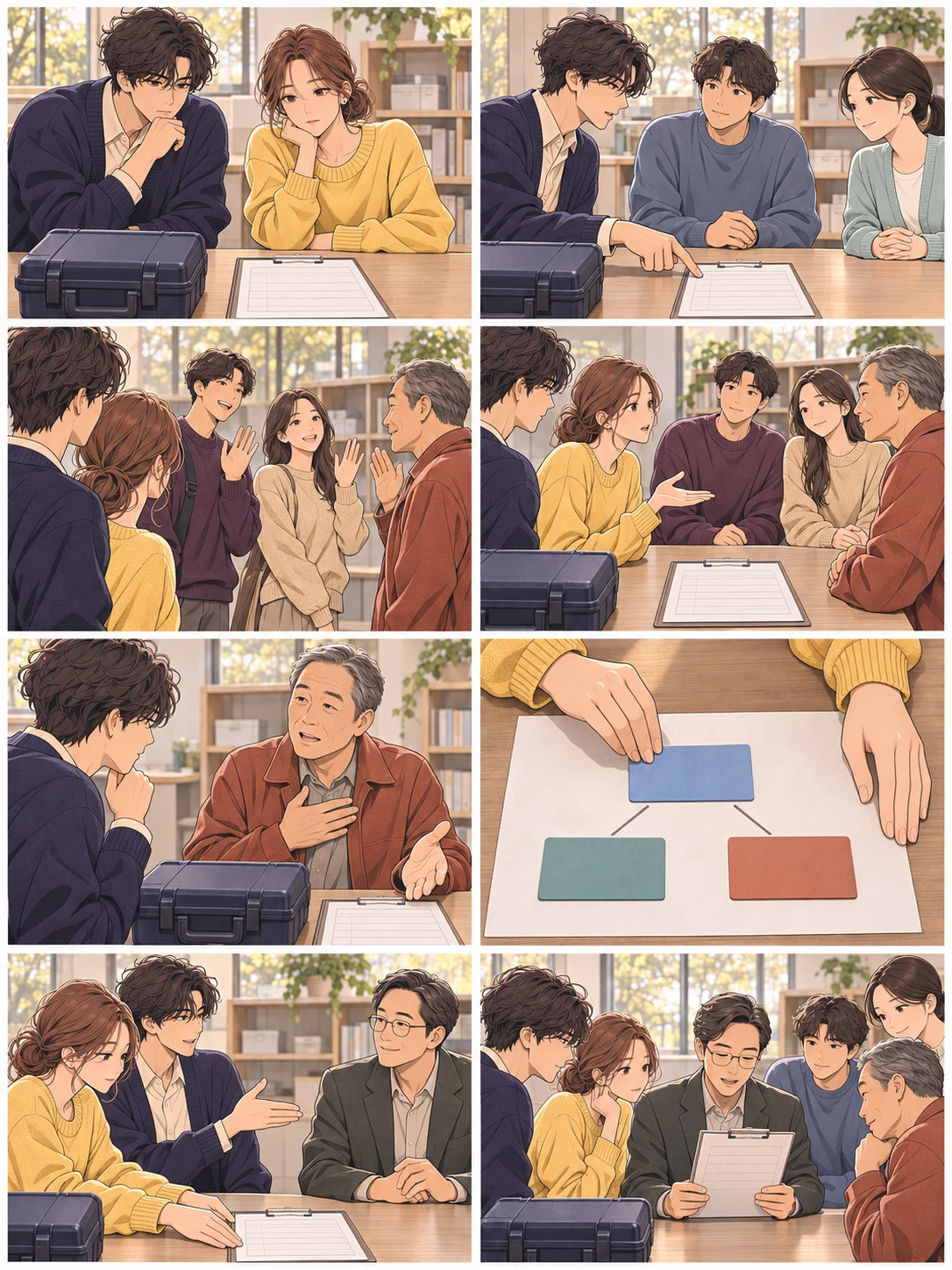
Jin imagined the song as the sound of wind that could be heard inside the novel. Ara read it as an image of remembering neighbors who had left. They each wrote down where they heard that meaning in the same line. When interpretations differ, we can ask what the other person read before deciding who is right.
A modern interpretation for this story
A question to take with you
If someone reads the same story differently, can I ask which line led them there?
Share the question together with a link to this story.
About the source and this adaptation
Sanhedrin 92b:2–4 in the Babylonian Talmud preserves different readings of the dry bones in Ezekiel 37. In section 3 Rabbi Eliezer says the revived people sang and died again. In section 4 Rabbi Nehemiah reads the account as a parable, while Eliezer, son of Rabbi Yosei the Galilean, says the revived people later had children. The wisdom line paraphrases two views from sections 3–4. The novel with the empty fountain, the reading group, and Jin and Ara’s dialogue are modern fiction created with AI assistance.