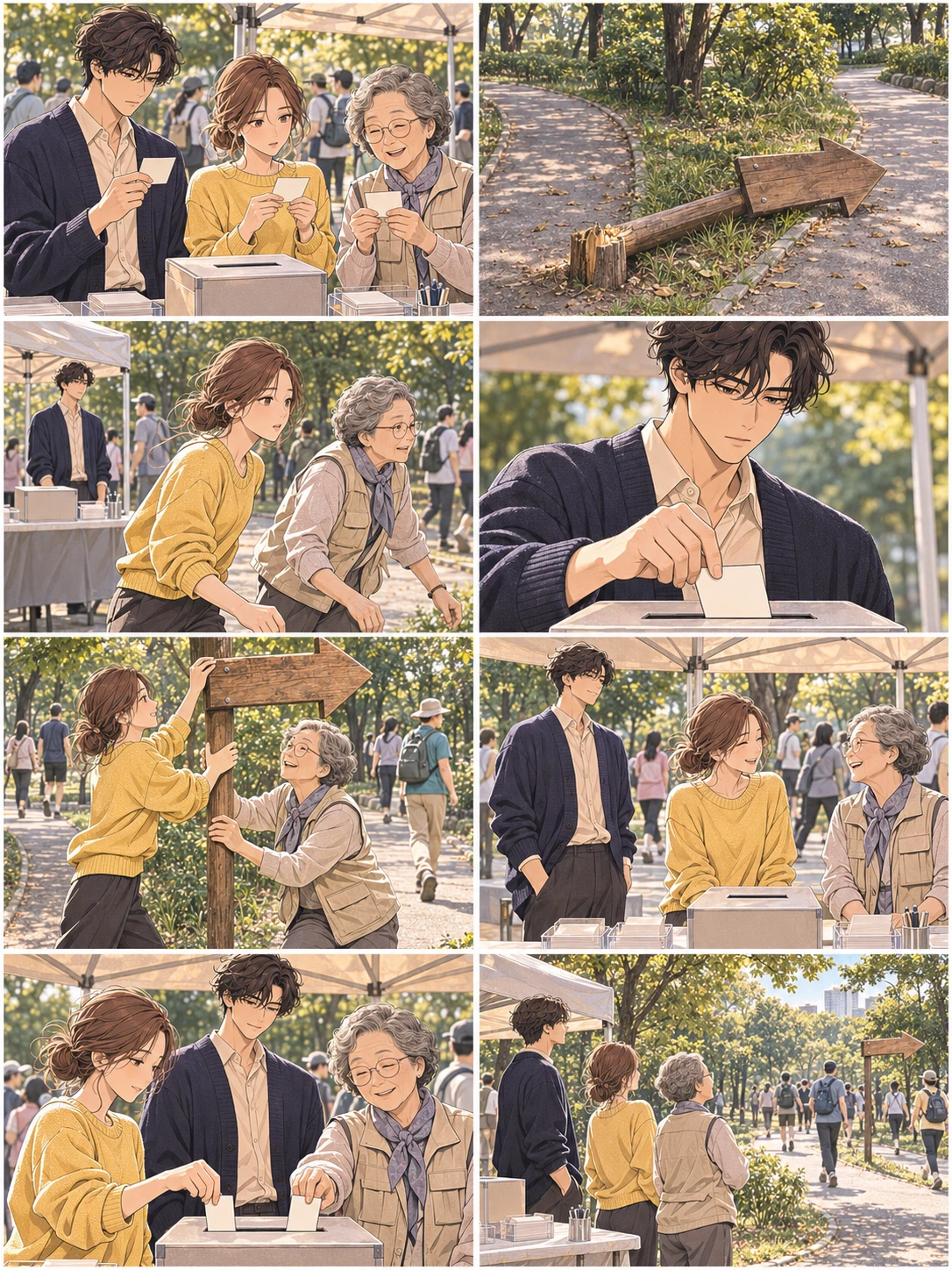
Ara and the organizer first took care of the path people were using. Jin thought they would skip turning in their cards, but morning check-in was still open. They came back and each finished their part. When the order of tasks changes, we can check what’s still left to do and when we can do it.
A modern interpretation for this story
A question to take with you
When the order of a shared task changes, how can I tell what still needs doing?
Share the question together with a link to this story.
About the source and this adaptation
In Jerusalem Talmud Berakhot 1:2:6, Rabbi Yehuda recalls walking behind Rabbi Elazar ben Azariah and Rabbi Akiva while they were occupied with religious duties. When it was time for the Shema, he thought they might be forgoing it, so he recited it and reviewed his learning. The two then began when the sun was above the mountaintops. The surrounding passage discusses the time for reciting the morning Shema. The parallel Tosefta account describes the two as attending to communal needs. The wisdom line paraphrases their actions that day. The neighborhood walk, sign and cards are modern fiction created with AI assistance.