A Little WisdomTalmud stories for everyday life
← All stories

217 · 8 panels

The Price of the Same Dream

The dream was written the same way. The two screens gave opposite answers.

Inspired by a source · Creative adaptationNo sign-up · All stories free
Read at your own pace.
They wrote it down in exactly the same words.
Story

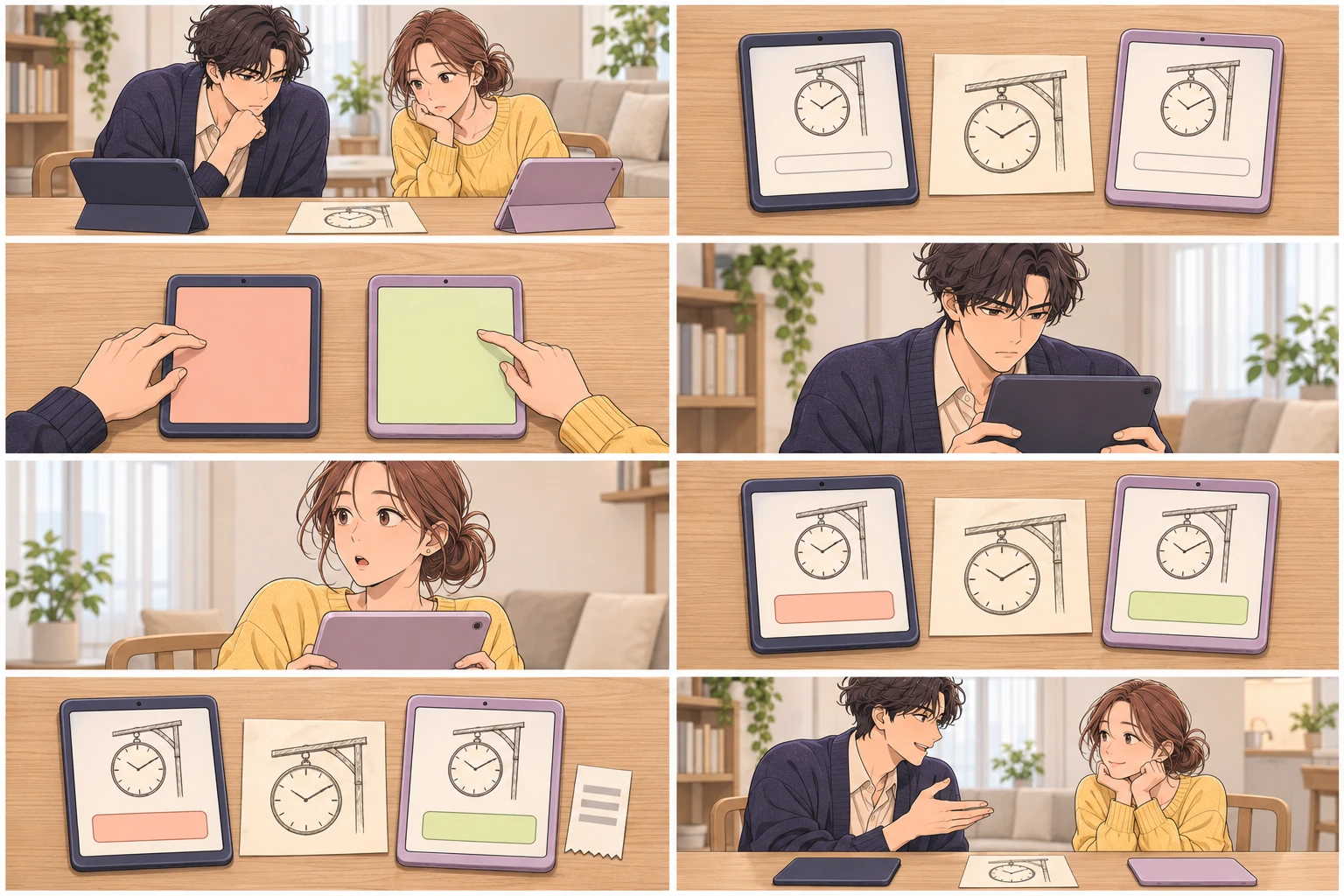
Jin and Ara made up a dream about a clock in an empty station.

They wrote it down in exactly the same words.

Each entered the same sentence.
Story

They opened the same dream interpretation service.

Each entered the same sentence.

They didn’t change the words of the dream.
Story

Ara picked a paid reply. Jin picked a free one.

They didn’t change the words of the dream.

Jin read the screen again.
Story

Jin’s answer said the clock meant he would miss an opportunity.

Jin read the screen again.

Ara asked what Jin’s reply had said.
Story

Ara’s answer said the clock meant a good time was ahead.

Ara asked what Jin’s reply had said.

They put the answers side by side and compared them.
Ara

Same sentence, opposite readings.

They put the answers side by side and compared them.

Only Ara had a payment record.
Story

They checked again that they had entered the same dream.

Only Ara had a payment record.

They put their devices down.
Jin

Before we pay for another answer, let’s think about why we got different ones.

They put their devices down.

A thought from the Talmud

Bar Haddaya gave Abaye and Rava different readings of the same dream. He predicted a profit for Abaye, who paid him, and a loss for Rava, who didn’t.

The source idea in our own words · Not a direct quotation

Berakhot 56a:2–4 · Read the source ↗

A lesson for today

Jin and Ara entered the same invented dream and compared the replies. The story was identical, but the paid answer was reassuring and the free one alarming. Before buying another answer, they looked at what had changed apart from the story.

A modern interpretation for this story

A question to take with you

When the same question gets different answers, what might have changed in the way the answers were made?

Share the question together with a link to this story.

About the source and this adaptation

In the Babylonian Talmud, Berakhot 56a:2–4, the dream interpreter Bar Haddaya gives favorable readings to people who pay him and unfavorable readings to those who don’t. In section 2, Abaye and Rava read the same scriptural verse in a dream. Abaye, who pays, is told his business will profit, while Rava, who does not, is told it will lose money. Sections 3–4 give more examples of the same pattern. The wisdom line paraphrases the contrast in section 2. The dream of a station clock, the screens, and the imaginary service are modern fiction created with AI assistance.

Read the source ↗

AI-generated artwork · Creative adaptation

If it stayed with you, support us with a follow.

Visit one of Park Seoyeon's channels. If you enjoy a post, a like or a comment is welcome too.

Take your next walk in SeongsuSungsuya · Pop-ups, cafés and local discoveries

Park Seoyeon is an AI-created fictional character.
Visiting, signing up and following are optional. They are never required to read.

For your next little pause

How You Set the Table

218 · 8 panels

Read the next episode