At one table there was plenty to eat. In another room, two people divided the heavy and light tasks.
Inspired by a source · Creative adaptationNo sign-up · All stories free
Read at your own pace.
01
Story
In one home, a son brought his father a generous meal.
His father lifted his spoon, then looked at the dishes.
02
Story
The father asked where the good food had come from.
The son cut him off and asked what use it would be for him to know.
03
Story
The father put his spoon down.
The food was still there, but he didn’t ask again.
04
Story
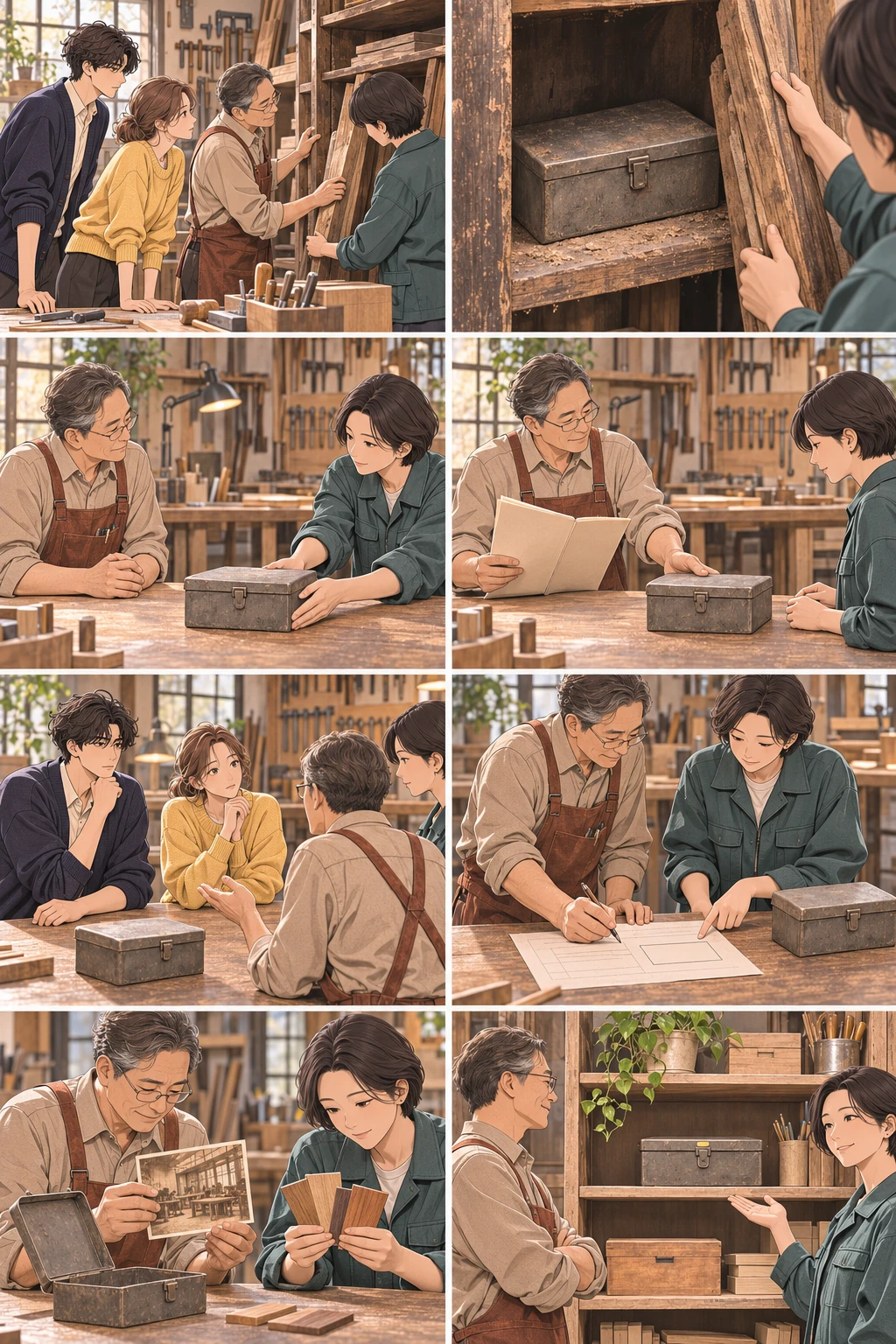
Elsewhere, in the neighborhood workspace Jin and Ara shared, there were boxes and sorting cards.
A daughter and her father stood at the worktable.
05
Daughter
I’ll move the heavy boxes. What would you like to do with the cards?
She showed him the cards on the worktable.
06
Father
I’ll sit down and have a go at sorting these.
He moved the cards he’d chosen closer to his chair.
07
Story
While the daughter moved the boxes, her father sorted the cards.
Their two tasks came together at the same worktable.
08
Story
When the work was done, they sat side by side at the table.
Her father suggested getting the cards ready first next time, and she nodded.
A thought from the Talmud
One son served his father fine food and insulted him. Another asked his father to take over at the millstone while he took on work where he might be humiliated or beaten.
The source idea in our own words · Not a direct quotation
One father sat before a carefully prepared meal and was cut off when he asked a question. The other chose to sit and sort cards while his daughter moved the boxes. Helping includes what we offer, how we listen, and what the other person gets to choose for themselves.
A modern interpretation for this story
A question to take with you
When I think I’m helping, is there still room for the other person to ask and choose?
Share the question together with a link to this story.
About the source and this adaptation
Jerusalem Talmud Peah 1:1:26 contrasts two scenes about honoring parents. The first son serves fattened chickens but answers his father’s question with an insult. The second, when millers are called up, asks his father to take his place at the millstone and offers to go where he himself might be humiliated or beaten. The wisdom line paraphrases this contrast. A shorter parallel occurs in Babylonian Talmud Kiddushin 31a:14–31b:1. The two modern families, meal, and shared workspace are modern fiction created with AI assistance.