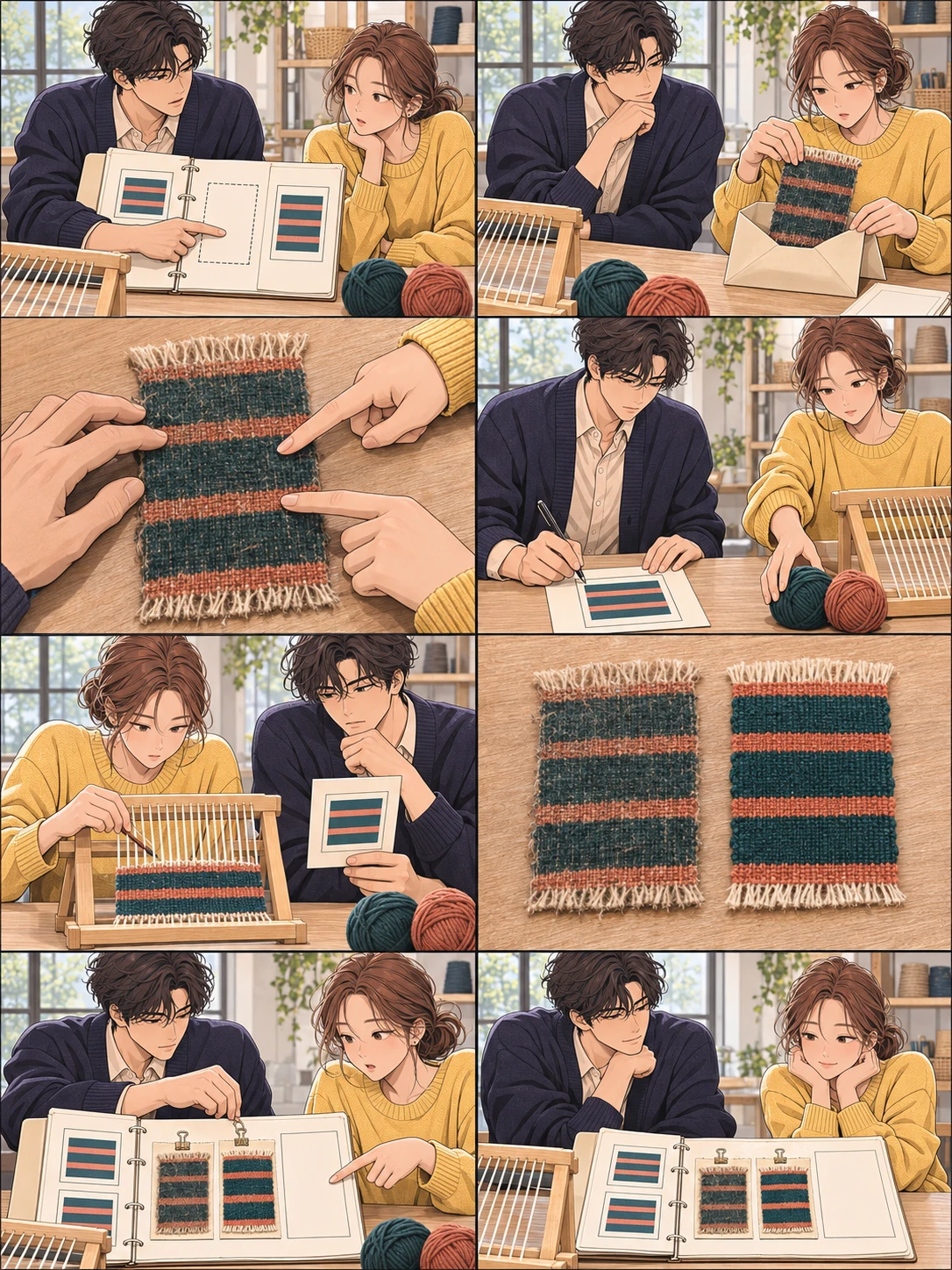
With the pattern sheet missing, Jin and Ara unfolded an old scrap of cloth. They worked out the order and width of the stripes, wove a small sample and set the two pieces side by side. They could make the pattern again, though they could not tell what kind of yarn had originally been used. When we reconstruct a record, we can write down both what we have verified and what we still don't know.
A modern interpretation for this story
A question to take with you
When rebuilding a lost set of instructions, how can we record what the evidence supports and what remains unknown?
Please include the source link when sharing.
If it stayed with you, support us with a follow.
Visit one of Park Seoyeon's channels. If you enjoy a post, a like or a comment is welcome too.
Park Seoyeon is an AI-created fictional character. Visiting, signing up and following are optional. They are never required to read.
Temurah 16a:8 recounts that a fortiori inferences, interpretations connecting similar wording, and detailed teachings were forgotten during the mourning for Moses. In segment 9, Rabbi Abbahu says that Othniel son of Kenaz recovered them through careful reasoning. He cites Joshua 15:17, which tells of Othniel's capture of Kiriath Sefer. The wisdom line paraphrases the recovery passage. Jin, Ara, the little weaving room, the missing pattern and their comparison of samples are AI-assisted modern fiction.