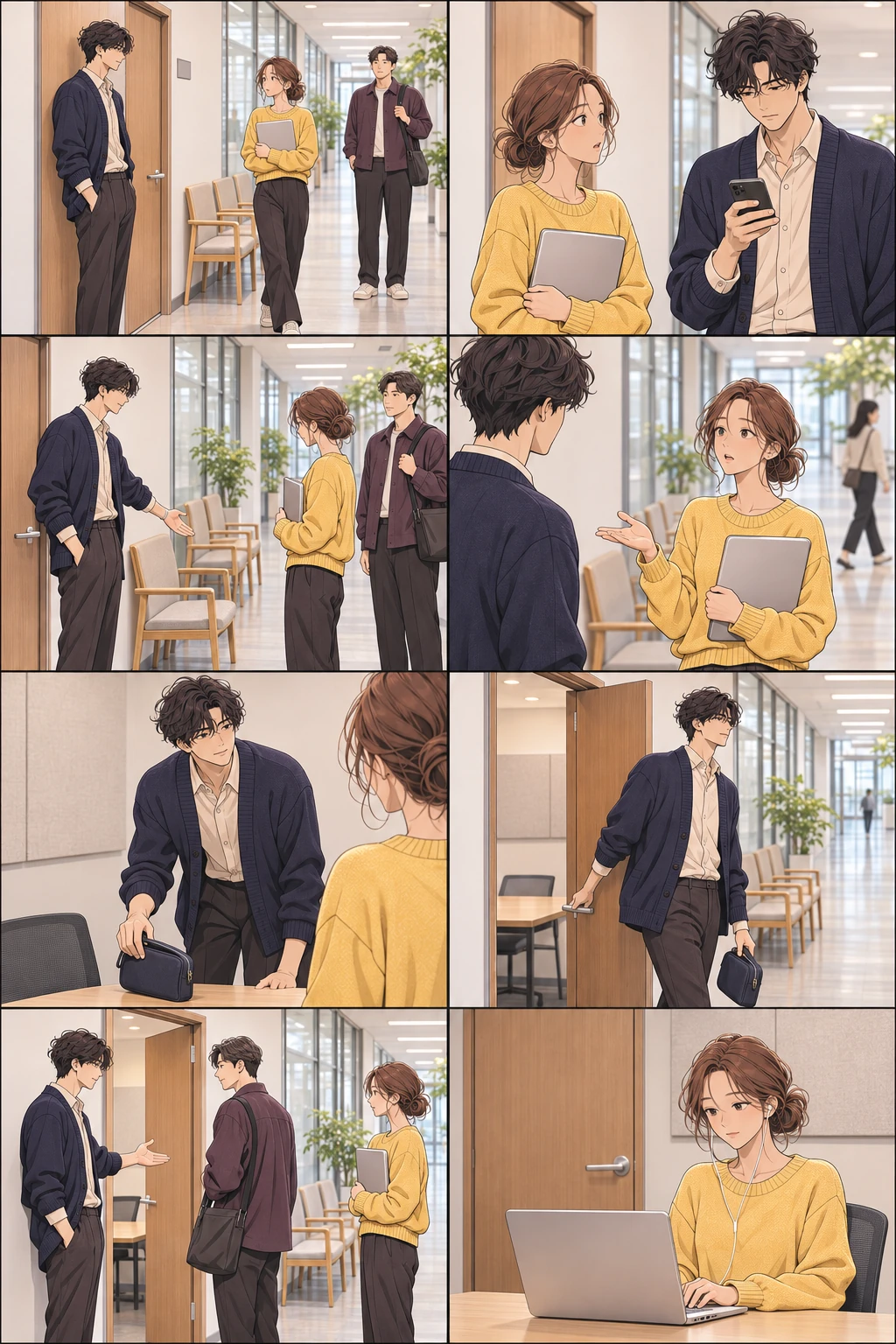
There was a free chair, but Ara needed a place where people passing by could not hear her. Jin, who managed the room bookings, found the overlap and moved his own equipment check. The first visitor kept their time. When we offer an alternative, it matters whether the person can do what they came to do there.
A modern interpretation for this story
A question to take with you
When someone says a setup you arranged makes it hard for them to take part, what can you change yourself?
Please include the source link when sharing.
If it stayed with you, support us with a follow.
Visit one of Park Seoyeon's channels. If you enjoy a post, a like or a comment is welcome too.
Park Seoyeon is an AI-created fictional character. Visiting, signing up and following are optional. They are never required to read.
In Chullin 60b:2–4, Rabbi Shimon ben Pazi uses a story about the moon to read Genesis 1:16, which calls the two lights great and then names a greater and a lesser light. The moon asks how two kings can share one crown and is told to make herself smaller. She asks why a sound observation should cost her, and the offers that follow do not comfort her. God calls for atonement on His behalf for diminishing the moon. Rabbi Shimon ben Lakish links this to the new moon offering in Numbers 28:15. The wisdom line paraphrases the moon’s objection in section 3. Jin, Ara, the room booking, the hallway chair, and the dialogue are AI-assisted modern fiction about the responsibility of someone managing access to a shared facility.