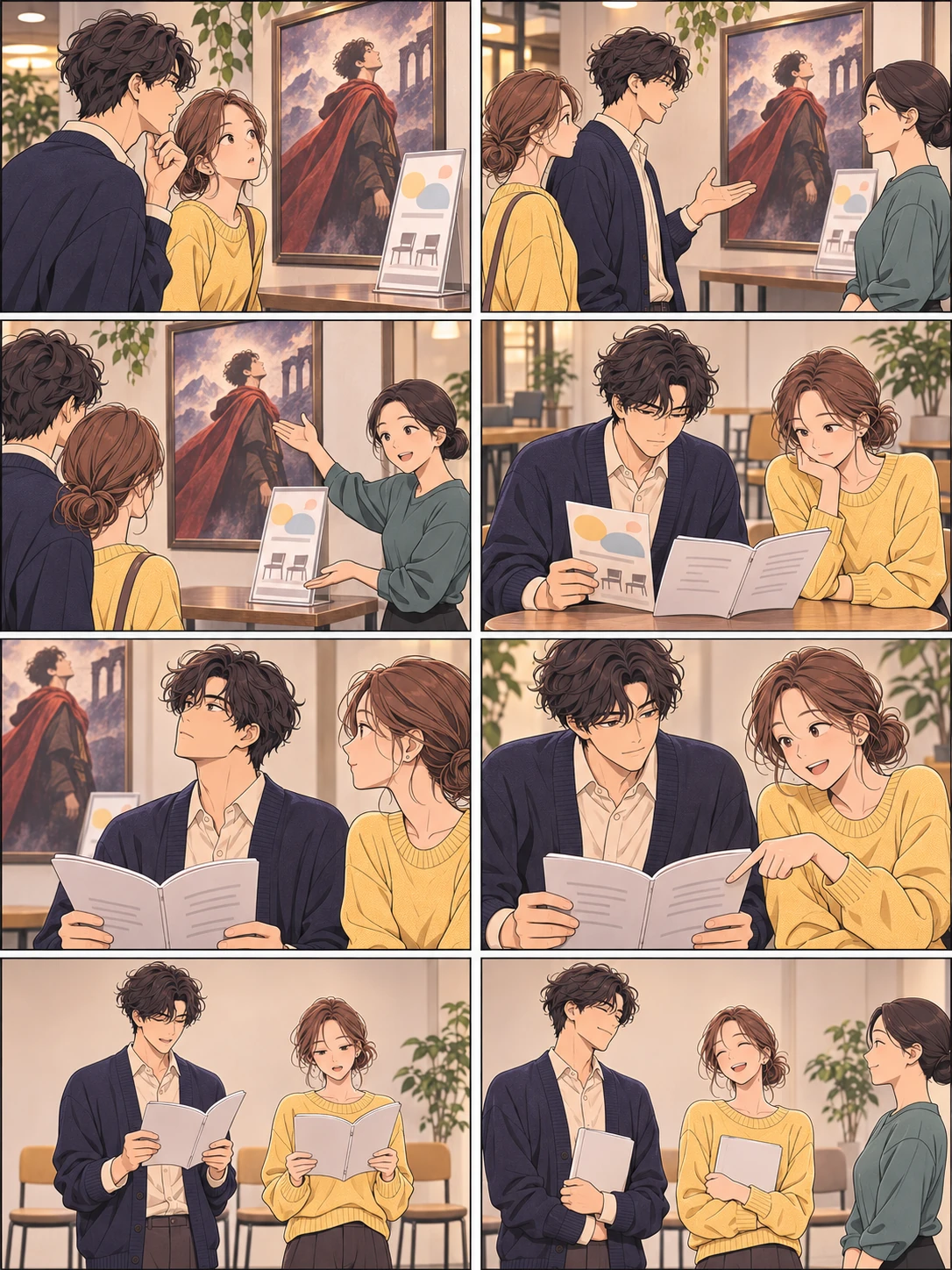
Jin imagined that the lead costume on the poster was part of today's experience. After reviewing the actual activity and scene, he chose something he wanted to try without a promise of that part. This is not about giving up a desired role or accepting a fixed social rank. It is one example of learning what an opportunity offers and choosing whether to take part.
A modern interpretation for this story
A question to take with you
Could I learn what lies behind an appealing position and then make my choice again?
Please include the source link when sharing.
If it stayed with you, support us with a follow.
Visit one of Park Seoyeon's channels. If you enjoy a post, a like or a comment is welcome too.
Park Seoyeon is an AI-created fictional character. Visiting, signing up and following are optional. They are never required to read.
Shabbat 31a:7–9 is the distinct visit of a man attracted by the High Priest's garments, who requests conversion on condition of receiving that position. After Shammai, he comes to Hillel, who accepts his conversion and guides him to study the rules. He reads a death-penalty passage about an unauthorized person's approach, hears that it applies even to King David, withdraws his demand and expresses gratitude. This includes difficult ancient norms of conversion, priestly eligibility and punishment. The modern story separately interprets reconsidering an expectation through learning. Jin, Ara, the theater, poster, casting explanation, reading experience, dialogue and ending are AI-assisted fiction, not present-day casting or legal principles derived from those religious norms. The three converts meet at the end of paragraph 9 to reflect on the preceding encounters.