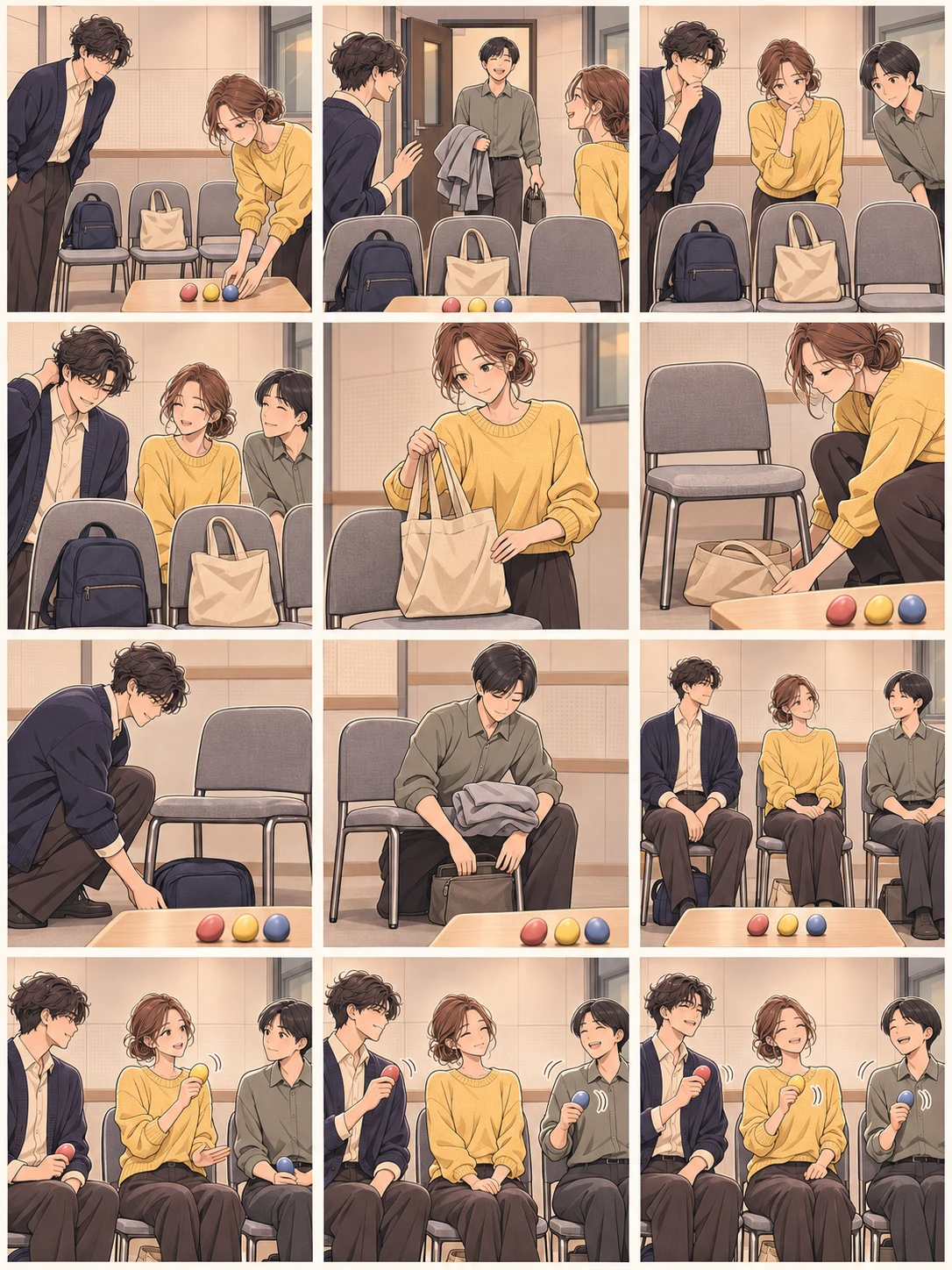
A familiar arrangement can hide the fact that our belongings are taking someone else's place. Rather than moving another person's things without asking, we can start with our own small, light items. This is a modest attempt to share the space already there, without making cleanup a condition of participation.
A modern interpretation for this story
A question to take with you
Have my belongings taken a seat intended for someone to join us?
Please include the source link when sharing.
If it stayed with you, support us with a follow.
Visit one of Park Seoyeon's channels. If you enjoy a post, a like or a comment is welcome too.
Park Seoyeon is an AI-created fictional character. Visiting, signing up and following are optional. They are never required to read.
Shabbat 127a:8–12 discusses how much to move and who moves it to make room for guests and study. Sections 9 and 10 give similar accounts of Yehuda HaNasi and Ḥiyya arranging for grain bundles to be cleared when students lacked space. Section 12 rejects the inference that the leader personally did all the clearing: he directed it, and each person moved bundles to make room for himself. The two examples are treated as one discussion. Abraham's hospitality in section 13 is not this episode's subject. This AI-assisted modern fiction takes place in an already-booked practice room. Jin, Ara, their colleague, bags, rhythm practice and voluntary choices are invented. The original does not say the bundles were each person's private property. It is not used as a modern labor obligation or instruction to move heavy loads.