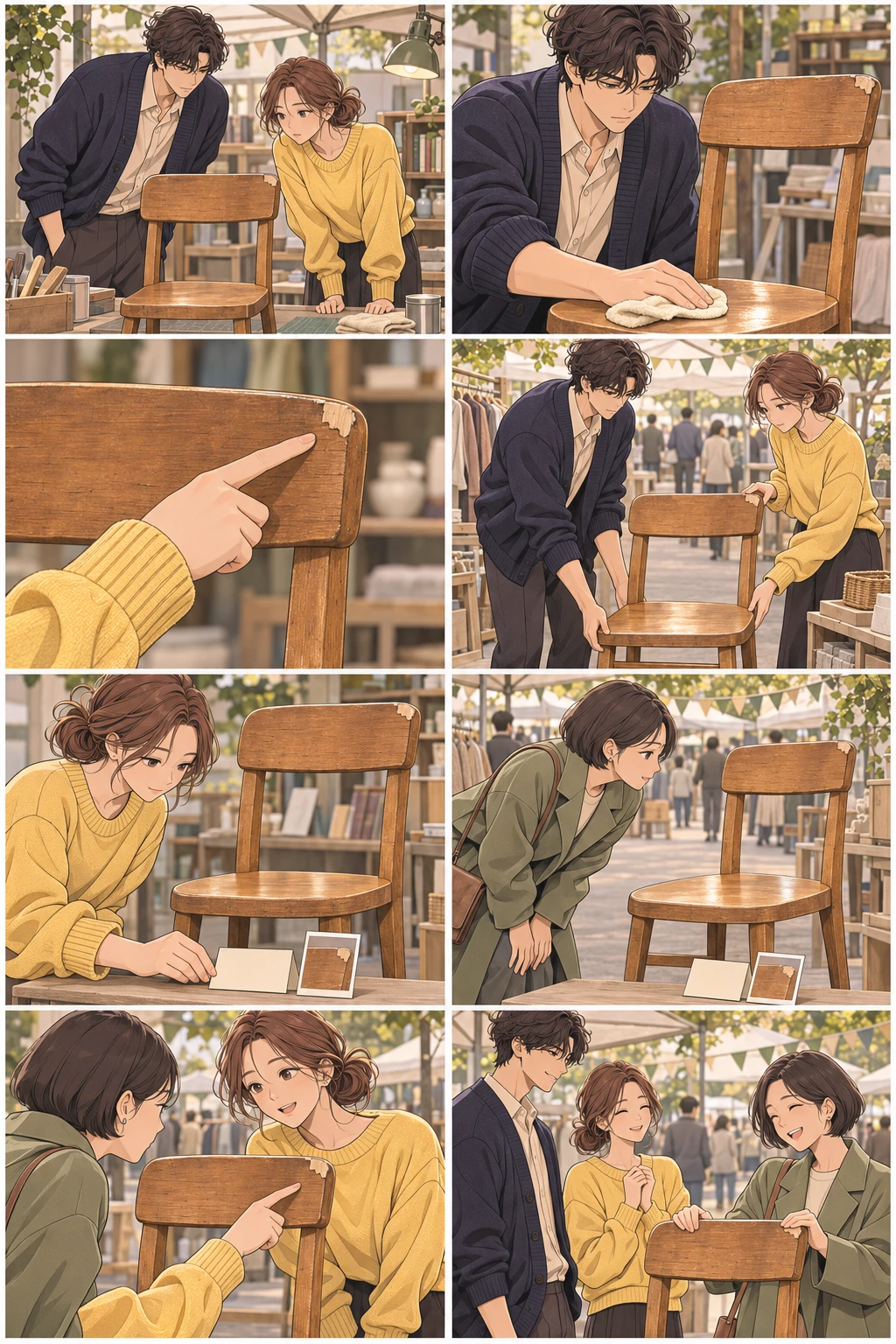
Polishing the seat was a way to care for the chair. If the old mark had been hidden, the customer would have had a harder time telling what condition it was in. Jin and Ara recorded what they had worked on and showed what remained. When people can see what was fixed and what was left alone, they can choose by their own standards.
A modern interpretation for this story
A question to take with you
If I pass on something I've fixed up, what should the next person be able to see to make their own choice?
Share the question together with a link to this story.
About the source and this adaptation
Bava Metzia 60b:3–4 of the Babylonian Talmud discusses dressing up goods before sale. Segment 3 gives examples of making an item appear better than it is. Segment 4 distinguishes embellishing the beauty of new goods from disguising flaws in older ones. The wisdom line paraphrases segment 4. Jin, Ara, the secondhand market, the chair, the record of its mark and the conversation with the customer are modern fiction inspired by the discussion and created with AI assistance.