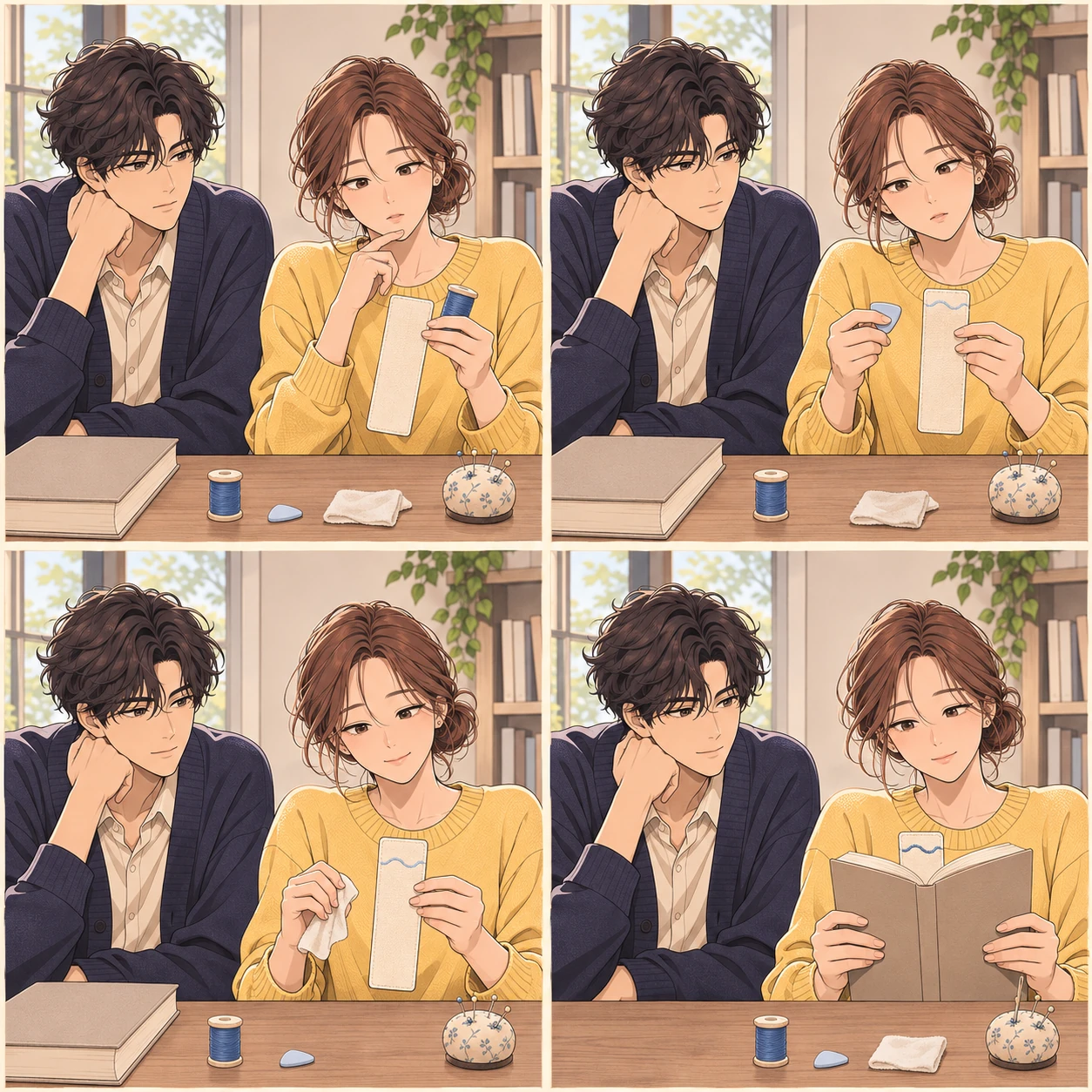
Before adding a design to her fabric bookmark, Ara marked its position in chalk. She moved a line that looked too close to the edge a little inward, then embroidered the chosen design. This is one example of checking a personal choice with a small draft on the actual material. It does not require the same sequence for every craft or promise perfection without revision or improved ability.
A modern interpretation for this story
A question to take with you
Before finishing something, what detail would I like to check with a small draft?
Please include the source link when sharing.
If it stayed with you, support us with a follow.
Visit one of Park Seoyeon's channels. If you enjoy a post, a like or a comment is welcome too.
Park Seoyeon is an AI-created fictional character. Visiting, signing up and following are optional. They are never required to read.
In Yoma 72b:18, Rabbi Elazar interprets the scriptural expressions 'work of an embroiderer' and 'work of a designer' for Tabernacle cloth as first marking a design in paint and then embroidering that place. The wisdom line paraphrases this explanation; it is not a direct quotation. Section 19 gives another explanation in Rabbi Nehemya's name, distinguishing needlework with the same design on both faces from weaving with different designs on the two faces. We do not turn the two explanations into one definitive modern craft rule. Nor do we adopt sections 9–17 on scholars, fear of Heaven, and life-and-death imagery as modern personal rankings, religious exclusion, effects or punishment. This separate modern interpretation explores choosing a design's position before fixing it in thread. Jin, Ara, the fabric bookmark, blue wave, chalk marks and revision, dialogue and ending are AI-assisted fiction.