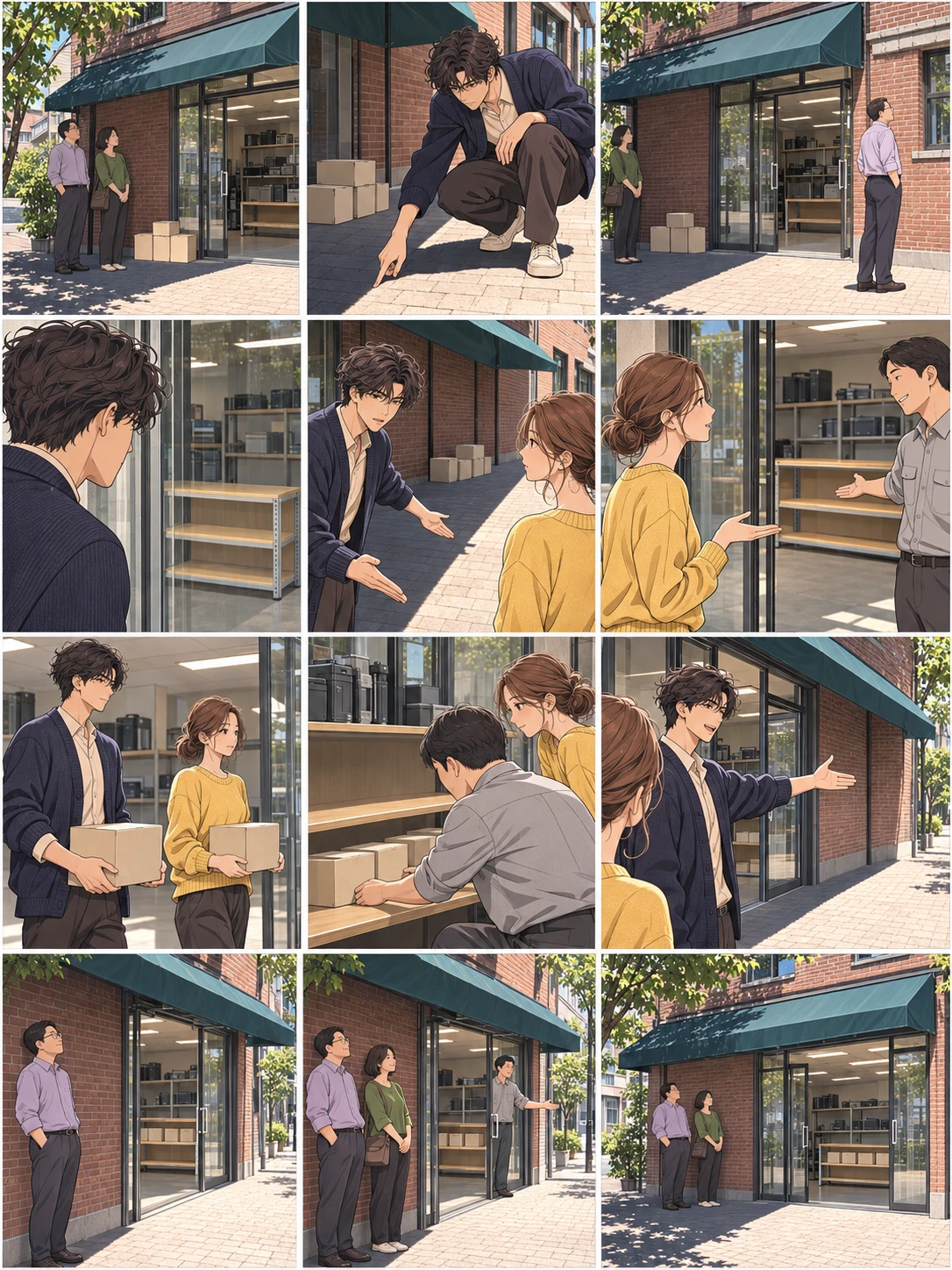
At first, the awning shaded the lending center’s supply boxes. Jin and Ara found an indoor shelf for them with the help of the attendant, making room for people to wait under the awning. The same space can serve a different purpose when we think about who needs it. What we already have may be enough to make things a little easier for someone.
A modern interpretation for this story
A question to take with you
Who benefits from the space we look after or set aside?
Please include the source link when sharing.
If it stayed with you, support us with a follow.
Visit one of Park Seoyeon's channels. If you enjoy a post, a like or a comment is welcome too.
Park Seoyeon is an AI-created fictional character. Visiting, signing up and following are optional. They are never required to read.
Avodah Zarah 11a:2–5 tells how the Roman emperor sent soldiers three times to bring Onkelos back after he converted to Judaism. As he walks with the last group, Onkelos touches a mezuzah and starts a conversation. A mezuzah is a case containing passages from the Torah, traditionally fixed to a Jewish doorpost. Onkelos brings up a king and the servants who guard him, then draws on Psalm 121:8 to explain that God watches over his people’s comings and goings. In the account, the last group also converts and the emperor sends no more soldiers. The wisdom line paraphrases section 5. Jin, Ara, and the neighborhood lending center are modern fiction created with the help of AI.