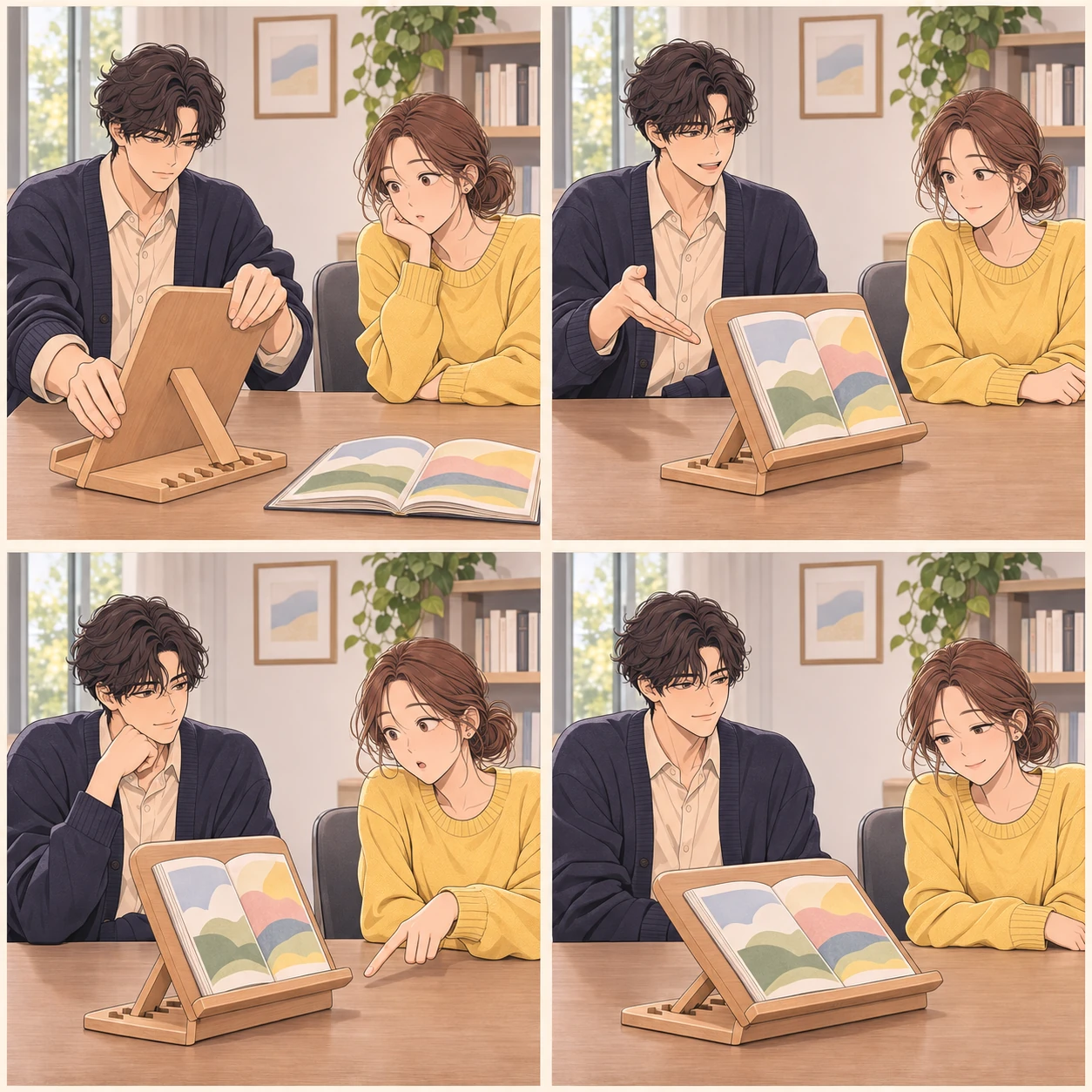
This time, Ara chose to watch one complete demonstration of the book stand. Then she asked how another angle would look from her seat and changed it herself to compare. The demonstration gave her a reference for exploring her own question. Questions can also be asked during an explanation; when and how to check something can be chosen together to suit the situation.
A modern interpretation for this story
A question to take with you
After seeing the whole process, what one thing would I like to compare for myself?
Please include the source link when sharing.
If it stayed with you, support us with a follow.
Visit one of Park Seoyeon's channels. If you enjoy a post, a like or a comment is welcome too.
Park Seoyeon is an AI-created fictional character. Visiting, signing up and following are optional. They are never required to read.
Berakhot 63b:15 interprets hasket in Deuteronomy 27:9 as first listening silently and then analyzing the details. It connects this with Rava's advice to first learn Torah and become familiar with it, then analyze it. This is a teaching about study, not an independent narrative. Nearby, sections 14 and 17 use strong expressions of self-devotion; 18–19 connect silence before an angry teacher with religious rewards; 20 encourages questions despite embarrassment. This modern interpretation separately chooses to watch one demonstration, then explore a personal question directly. Jin, Ara, the book stand, book, angle comparison, dialogue and ending are AI-assisted fiction. Ancient silence and rewards are not made into modern duties of obedience, blind trust in authority, bans on questions, or claims about memory, intelligence or health.