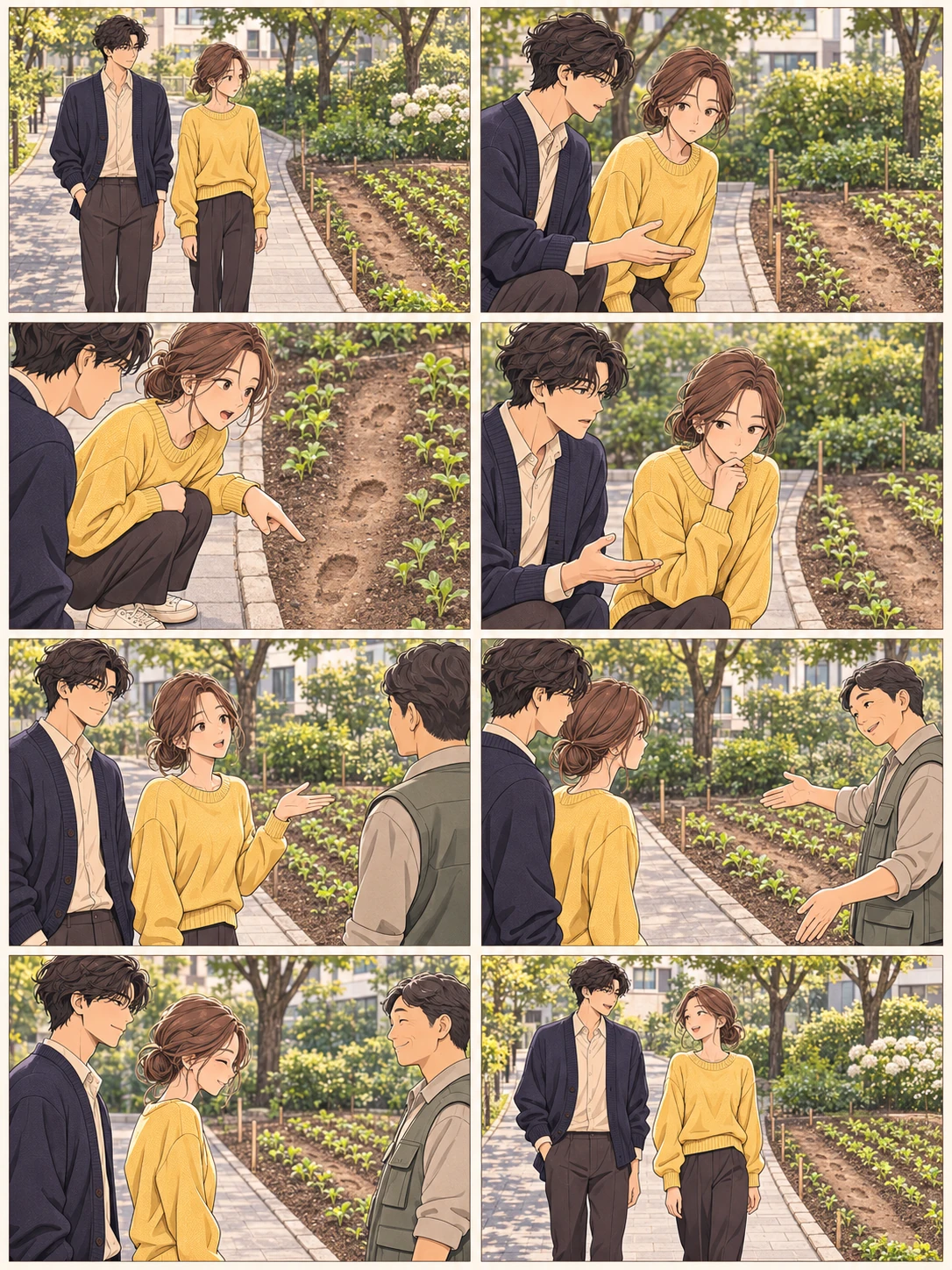
Even a common action can be worth checking in its particular setting. Instead of using what others did as an excuse, ask how the place you are about to enter is being used and choose the indicated way. You can change your action without accusing anyone.
A modern interpretation for this story
A question to take with you
Am I overlooking someone's space or work by saying that everyone does it?
Please include the source link when sharing.
If it stayed with you, support us with a follow.
Visit one of Park Seoyeon's channels. If you enjoy a post, a like or a comment is welcome too.
Park Seoyeon is an AI-created fictional character. Visiting, signing up and following are optional. They are never required to read.
In Eruvin 53b:21, Yehoshua ben Hananya walks along a worn path through a field and hears a young girl's objection. He answers that people already use the path; she sharply replies that earlier walkers created it by trampling the field. The innkeeper's meal story (18–20) and the boy's short-and-long road story (22–23), introduced under the same opening, are separate encounters. This AI-assisted modern fiction draws on not inferring permission from traces alone. Jin, Ara, the garden staff member, stopping before entering, the inquiry and the paved route are invented. The original's comparison to thieves is not applied to the modern characters. The story does not decide legal rights at a particular site or claim an environmental effect.