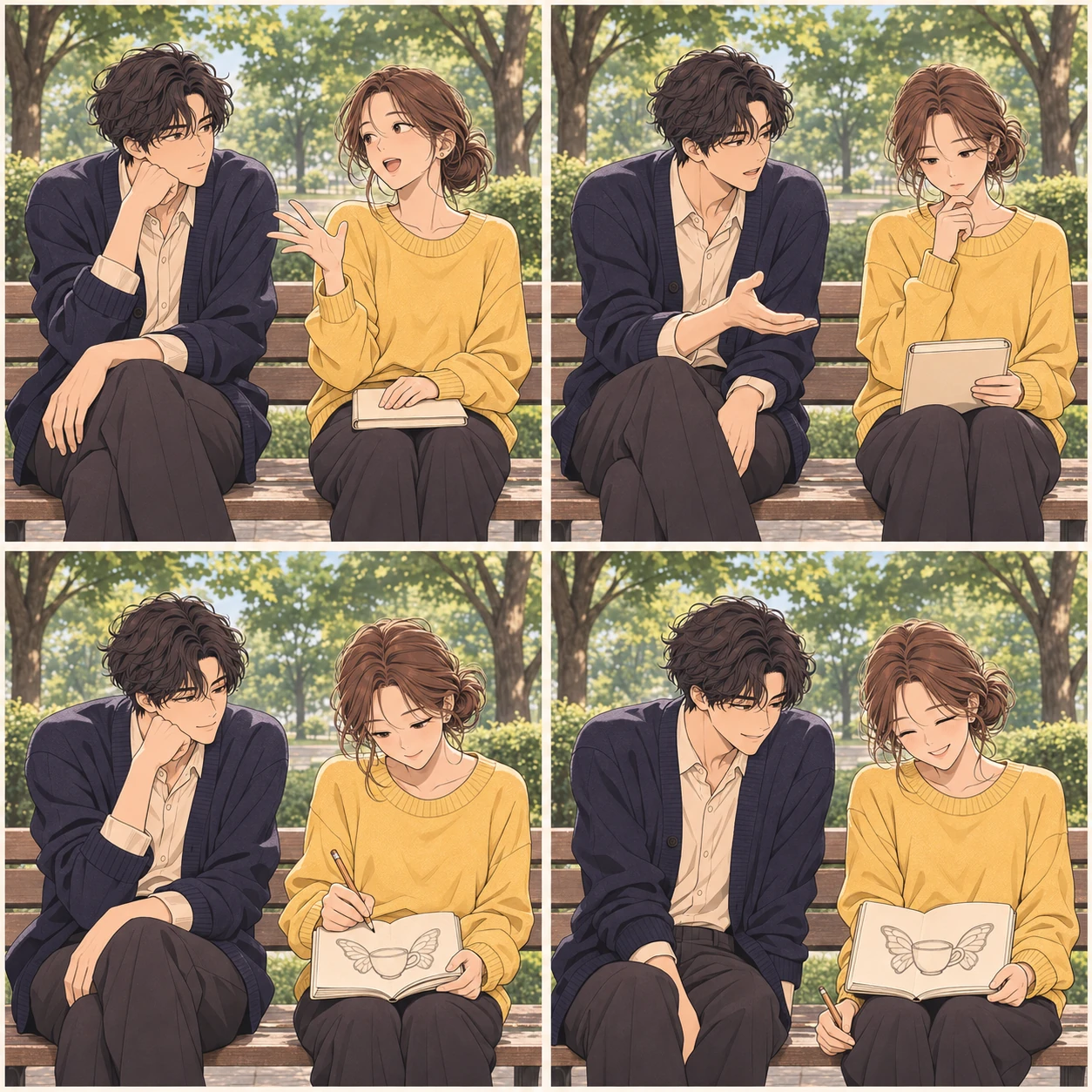
Ara did not decide what the winged teacup in her dream foretold. Rather than interpreting it for her, Jin asked how she wanted to preserve the scene. Ara drew it as an imagined scene in her own notebook, and they looked at the finished picture together. Using a dream as drawing material is a modern creative choice, not a method for discovering a dream's meaning or another person's mind.
A modern interpretation for this story
A question to take with you
Without treating a dream scene as fact, what imagined picture would I like to preserve?
Please include the source link when sharing.
If it stayed with you, support us with a follow.
Visit one of Park Seoyeon's channels. If you enjoy a post, a like or a comment is welcome too.
Park Seoyeon is an AI-created fictional character. Visiting, signing up and following are optional. They are never required to read.
Berakhot 55a:15–16 is a group of religious maxims about dreams. In section 15, Rav Ḥisda discusses interpretation and fulfillment, the emotions left by good and bad dreams, repentance and fear before God; neither kind of dream is fulfilled entirely. In section 16, Rabbi Yoḥanan, in Rabbi Shimon bar Yoḥai's name, interprets the straw-and-grain image of Jeremiah 23:28 to explain that dreams also contain idle elements. The wisdom line paraphrases section 16; it is not a direct quotation. The text does not declare all dreams meaningless. Preserving the scene as an imagined drawing rather than declaring it a real-world omen is a separate modern interpretation. Jin, Ara, the winged teacup, personal notebook, park, dialogue and ending are AI-assisted fiction. Dreams are not presented as modern prophecy, psychological diagnosis, health benefits or a rule that actions change destiny.