Ara’s draft opened as usual. Jin thought about why he had touched the file.
Inspired by a source · Creative adaptationNo sign-up · All stories free
Read at your own pace.
01
Story
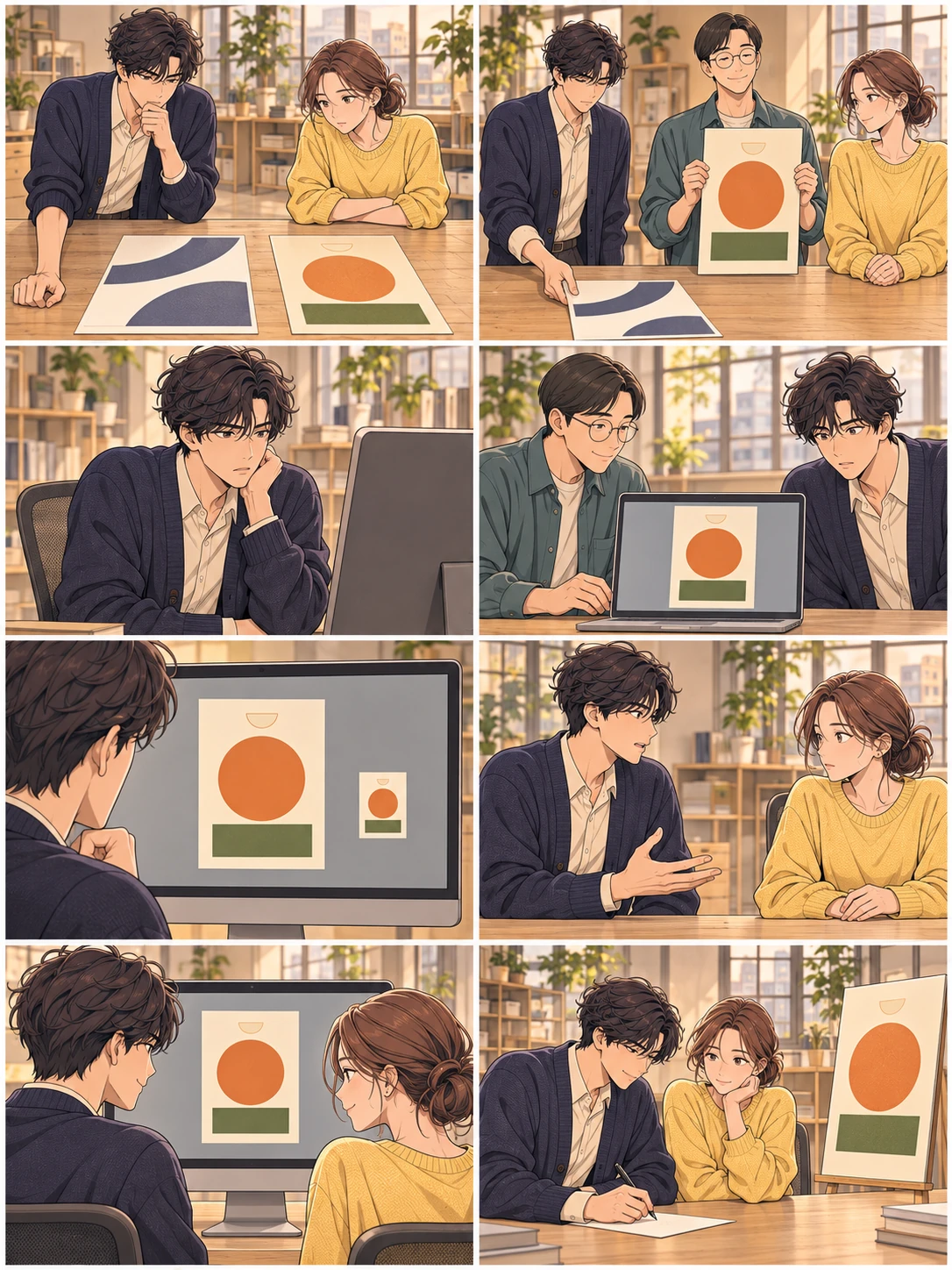
Jin and Ara designed posters for a neighborhood exhibition.
Their two drafts lay side by side on the worktable.
02
Story
The organizer held up Ara’s draft and suggested going with it.
Jin slowly set his own draft down.
03
Story
Alone afterward, Jin tried to remove Ara’s draft from the shared workspace.
He wanted no one to see it at the next session.
04
Story
The next day, a teammate opened Ara’s poster on a laptop.
The draft looked exactly as it had the day before.
05
Story
Jin had touched only a preview copy.
The saved original was still there.
06
Jin
I tried to delete your draft so people couldn’t see it. The copy is what disappeared. I’m sorry I did it.
Jin told Ara what he had touched and what he had meant to do.
07
Ara
If you have feedback on the draft, talk to me before changing the file.
They checked where to find the original and where to leave comments.
08
Story
Ara’s poster was still there beside the worktable.
Jin sat down next to Ara and wrote what he’d like to change.
A thought from the Talmud
Someone meant to eat food that was forbidden but received permitted food instead. Akiva read the passage as leaving room to seek forgiveness even though the outcome was different.
The source idea in our own words · Not a direct quotation
Ara’s original poster was still there. Jin nevertheless said that he’d meant to keep other people from seeing her draft. They checked where to leave feedback before changing a file in the future. Even when the outcome turns out all right, we can think about what we meant to do and find the words to tell the other person.
A modern interpretation for this story
A question to take with you
If my action turns out differently from what I intended, what can I tell the other person honestly about what I wanted and did?
Share the question together with a link to this story.
About the source and this adaptation
In the Babylonian Talmud, Kiddushin 81b:6, Rabbi Akiva considers someone who intended to eat prohibited pork but ended up with permitted lamb, and says atonement and forgiveness are still needed. The preceding passage interprets Numbers 30:13 in the case of a woman who intended to break her Nazirite vow, unaware that it had been annulled. Akiva then says atonement and forgiveness are all the more needed when the person does eat the prohibited food. The wisdom line paraphrases the first comparison, where intent and outcome differ. The poster and shared file are modern fiction created with AI assistance.