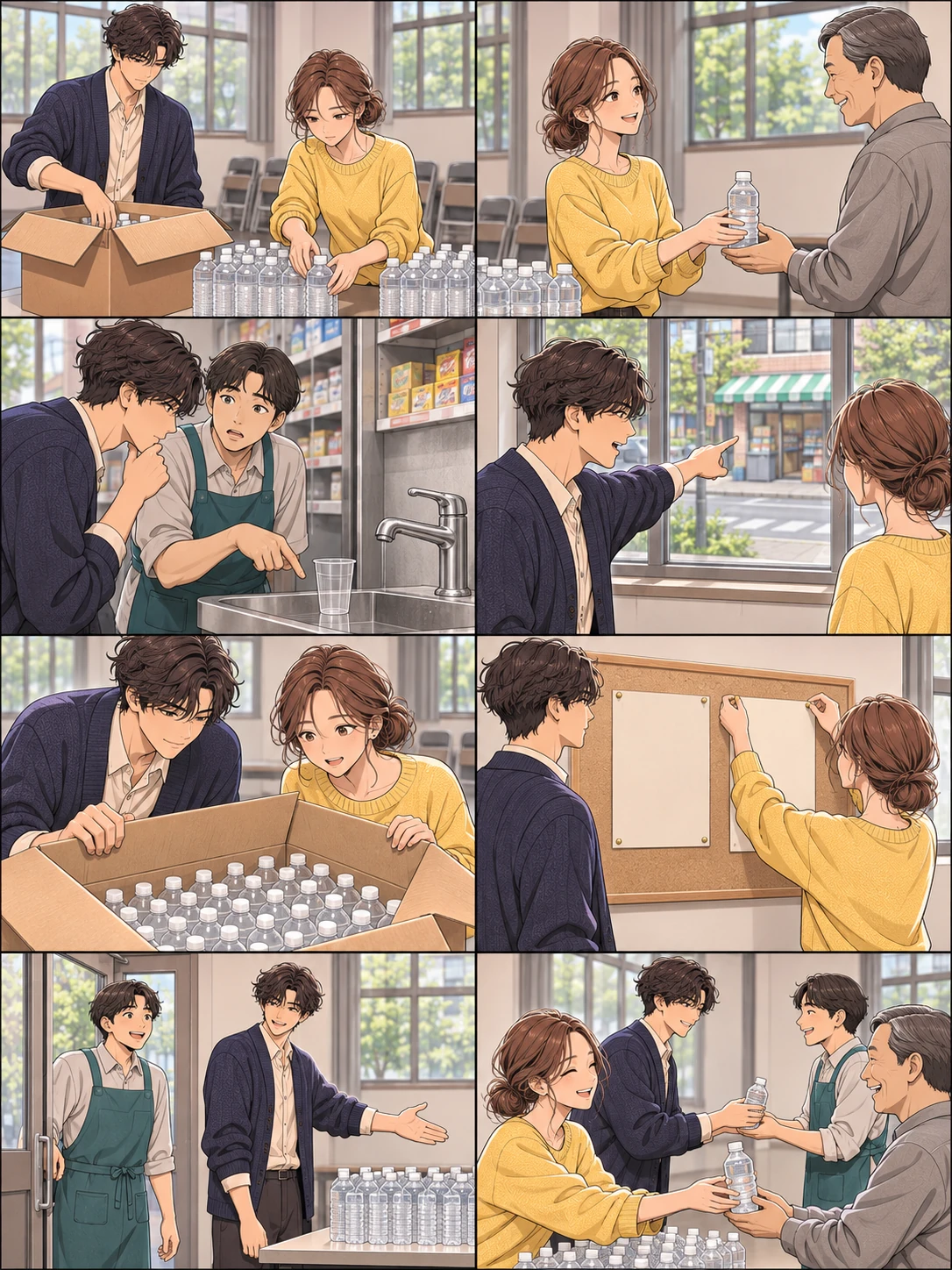
The first notice about bottled water reached only the apartment building. When Jin and Ara heard that the shops on the same lane had lost water too, they checked how much they had on hand. Then they invited the people working in those shops to collect water at the same table. When people face a shared problem, we can look beyond the group we thought of first to see who else could use the same help.
A modern interpretation for this story
A question to take with you
Who else facing the same difficulty could receive the help your group has put together?
Please include the source link when sharing.
If it stayed with you, support us with a follow.
Visit one of Park Seoyeon's channels. If you enjoy a post, a like or a comment is welcome too.
Park Seoyeon is an AI-created fictional character. Visiting, signing up and following are optional. They are never required to read.
Gittin 61a:5 cites a rule from the Mishnah. It says that poor non-Jews should be allowed to gather fallen ears of grain, forgotten sheaves, and produce left in the corner of a field. A rabbinic teaching then describes helping people in need, visiting the sick, and burying the dead across Jewish and non-Jewish communities. It gives ‘the ways of peace’ as the reason. The wisdom line paraphrases this rule. The water outage and Jin and Ara’s bottled-water distribution are modern fiction created with the help of AI.