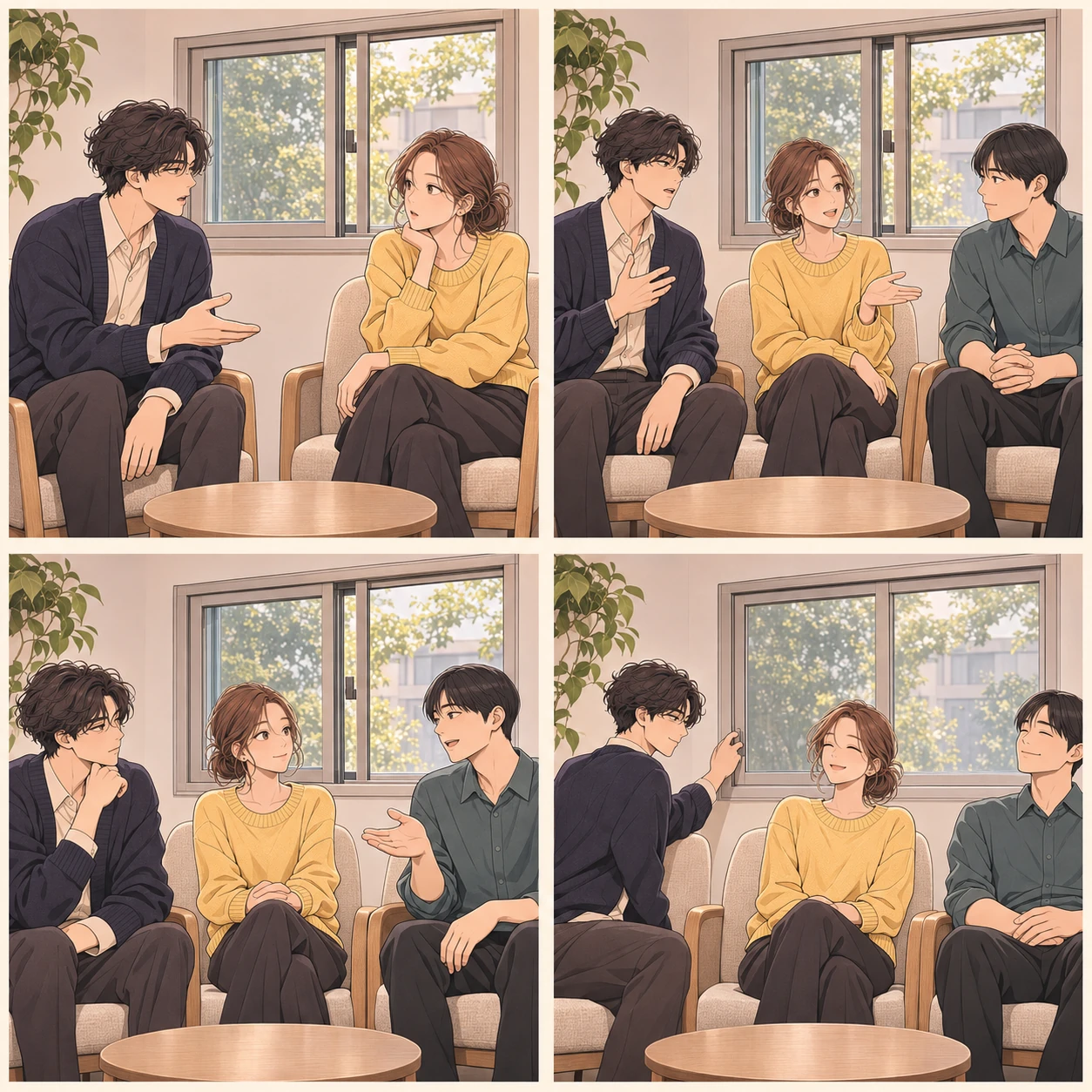
When Jin asked Ara to hear him first about the window, she suggested sharing their wishes together. Jin said he felt chilly and wanted it closed; the coworker wanted it open briefly and then closed. The three checked that this worked for everyone, and Jin actually closed it a little later. This is a voluntary choice about a small room, not a requirement that every conflict involve a meeting or compromise.
A modern interpretation for this story
A question to take with you
In a choice we share, have I heard the other person's wishes directly from them?
Please include the source link when sharing.
If it stayed with you, support us with a follow.
Visit one of Park Seoyeon's channels. If you enjoy a post, a like or a comment is welcome too.
Park Seoyeon is an AI-created fictional character. Visiting, signing up and following are optional. They are never required to read.
Sanhedrin 7b:14–15 discusses ancient courtroom procedure. In section 14, Rabbi Hanina invokes Deuteronomy 1:16 to warn a court not to hear one litigant before the other arrives, and a litigant not to present their case first in that absence. In section 15, Rav Kahana reads the verb in Exodus 23:1 as warning against receiving or conveying a false report, adding responsibility for litigants and witnesses. The wisdom line paraphrases section 14; it is not a direct quotation. Earlier in that same section, Rabbi Yohanan urges vigilance concerning rod and strap; section 13 lists court tools for flogging, a ban and a marriage-related rite. These are not adopted as modern punishments or court procedure. Jin, Ara, the adult coworker, window, voluntary conversation and agreement, dialogue and ending are AI-assisted modern fiction. Ara is an equal friend without judicial power. This private preference discussion is not legal advice, a rule requiring victims to meet another party, a claim that hearing both sides always finds the truth, or a guarantee of ventilation's health effects.