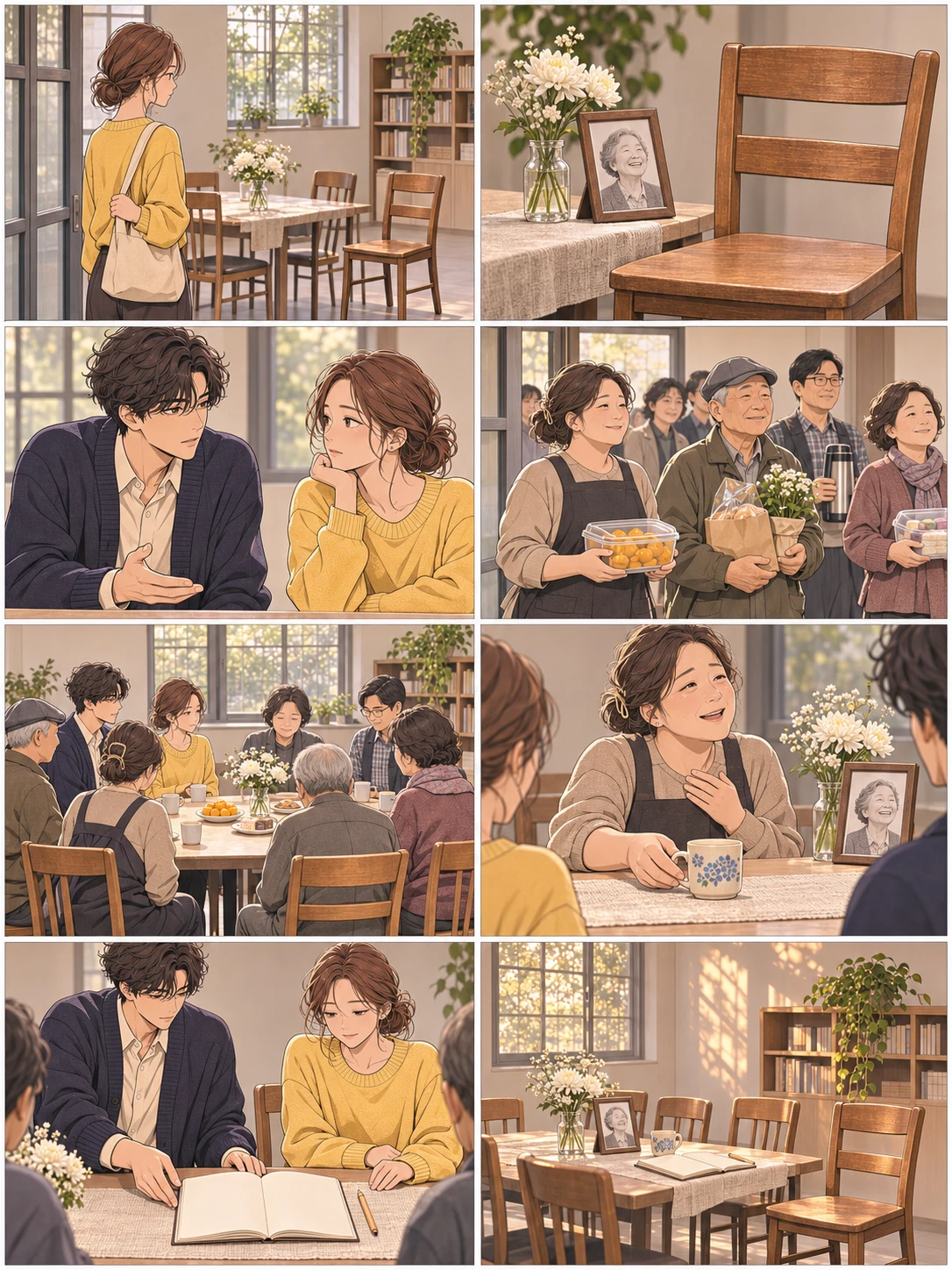
Ara and Jin set out somewhere to sit for anyone who remembered their neighbor. One person brought a teacup and recalled having tea together after work. Someone else just sat and listened. They left a notebook for anyone who wanted to leave another memory. People stayed for different lengths of time and shared as much as they wished.
A modern interpretation for this story
A question to take with you
When I think of someone I'd like to remember, what small moment with them would I like to share?
Share the question together with a link to this story.
About the source and this adaptation
In the Babylonian Talmud, Shabbat 152a:16–152b:1, Rav Yehuda speaks of ten people sitting in the place of someone who has died with no one to receive condolences. After a neighbor dies, he takes ten people there each day for seven days. The account ends with the deceased appearing in Yehuda's dream and saying his mind had been put at ease. The wisdom line paraphrases the teaching at 152a:16. The number in the title comes from the source. Jin, Ara, the market workers, the community room and the memory notebook are modern fiction created with AI assistance.