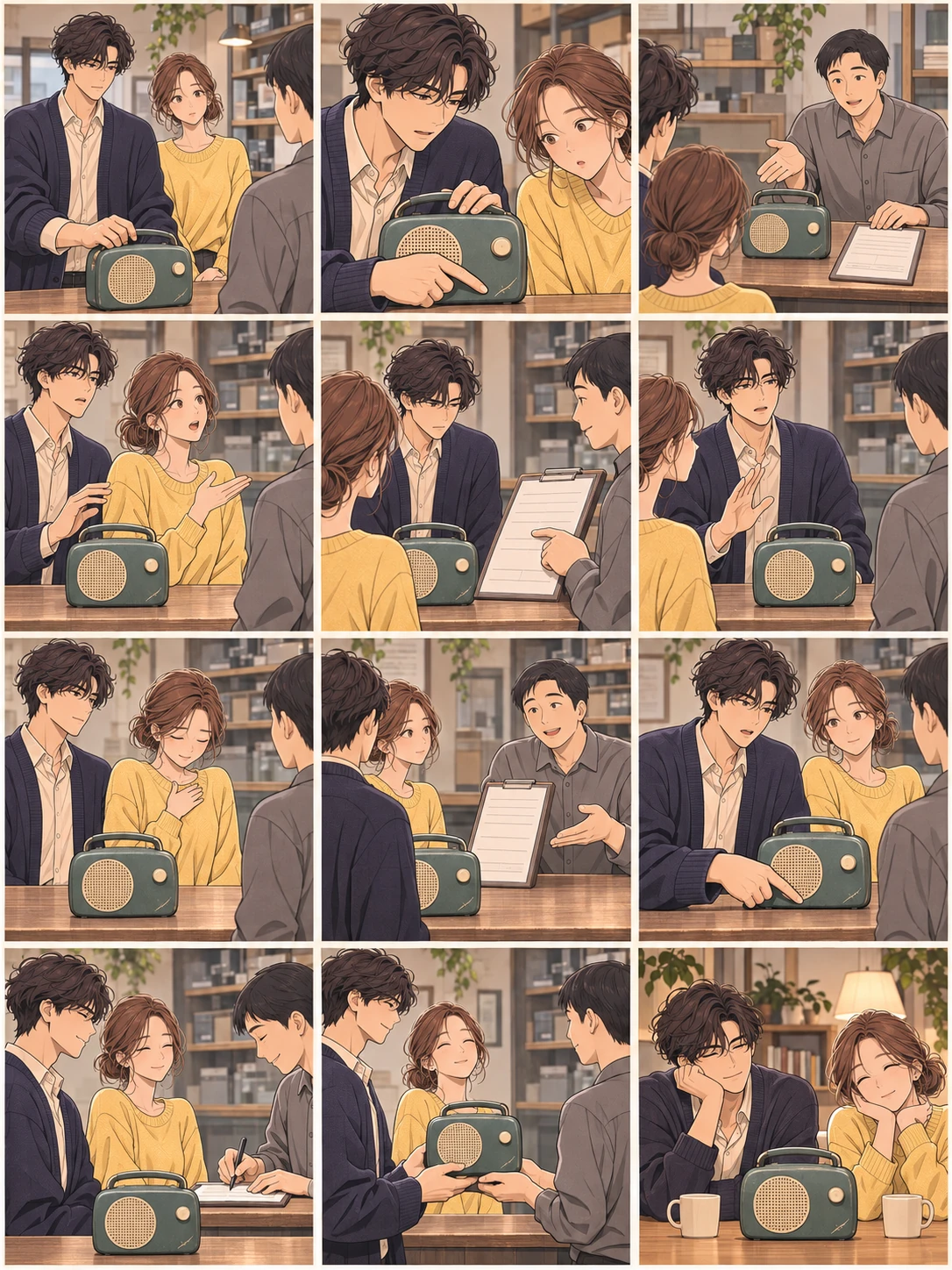
Ara assumed that accompanying Jin meant she knew what he wanted. Jin briefly stated that he wanted to choose what happened to his own radio, and Ara and the clerk returned that choice to him. Accompanying or helping someone can differ from deciding for them. Confirming what the person wants and addressing the explanation directly to them is the modern resolution chosen here, separate from the ancient story's violent actions.
A modern interpretation for this story
A question to take with you
Am I answering for someone simply because I came with them?
Please include the source link when sharing.
If it stayed with you, support us with a follow.
Visit one of Park Seoyeon's channels. If you enjoy a post, a like or a comment is welcome too.
Park Seoyeon is an AI-created fictional character. Visiting, signing up and following are optional. They are never required to read.
In Berakhot 51b:5–7, Ulla gives the cup of blessing after the meal to Rav Nahman. When Nahman asks him to send it to his wife Yalta too, Ulla refuses, arguing that a woman's offspring is blessed through a man's. Paragraph 6 reinforces that argument through scriptural interpretation. Hearing the refusal, Yalta angrily breaks 400 wine barrels. At Nahman's renewed request, Ulla sends another cup with an explanation that wine from the same barrel is also wine of blessing. Yalta replies insultingly that peddlers produce empty words and rags produce lice. The wisdom line paraphrases her strong protest; it does not change the story into quiet patience or a completed reconciliation. This is separately invented nonviolent modern fiction about stating one's own wishes. Jin, Ara, the personal radio, service conversation, confirmed choice, return and dialogue were created with AI assistance. Male-mediated religious blessing is not made into gender superiority or medical fertility claims. Destruction, retaliation and insults are not adopted as modern examples to follow.