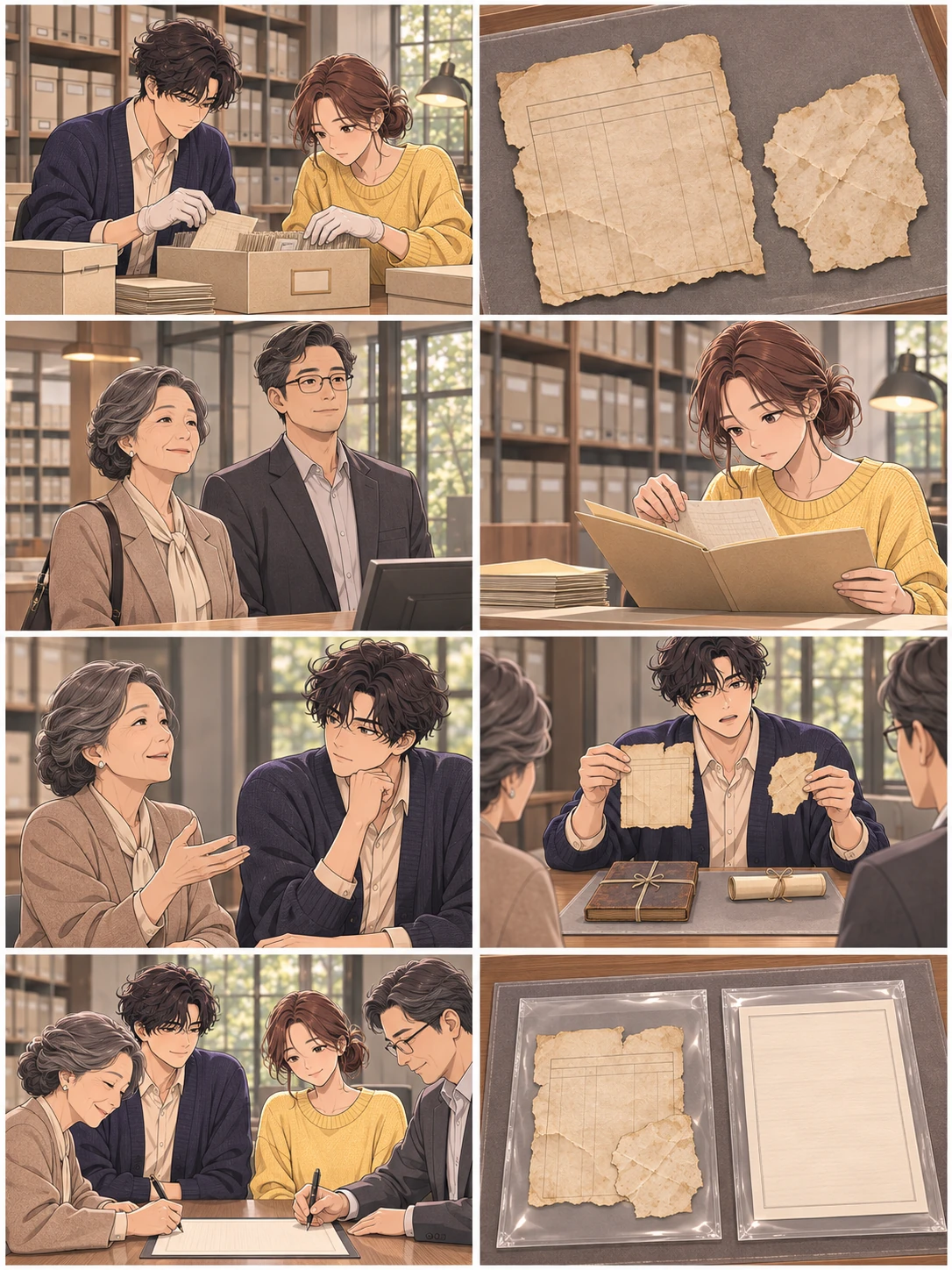
Reading one line on the torn paper and finding out why it was written were different tasks. Jin and Ara read the paper and listened to both people. They saved the old record separately from what the two agreed to now. When a record is incomplete, we can distinguish what is still legible from what we learn later.
A modern interpretation for this story
A question to take with you
Before drawing a conclusion from a single document, who could I ask to learn more about what happened?
Share the question together with a link to this story.
About the source and this adaptation
In the Babylonian Talmud, Ketubot 78b:12–79a:3, a woman writes a deed in her daughter's name before remarrying so that her future husband will not gain rights to her property. After a divorce and a dispute, Rav Nahman tears the deed. When Rav Anan objects, Mar Ukva first asks what happened and considers the purpose of the deed. Rava then asks whether a mother might truly give property to her daughter. The wisdom line paraphrases Mar Ukva's question. The recorder, the archive, the exhibition agreement and the separate preservation of the two records are modern fiction created with AI assistance.