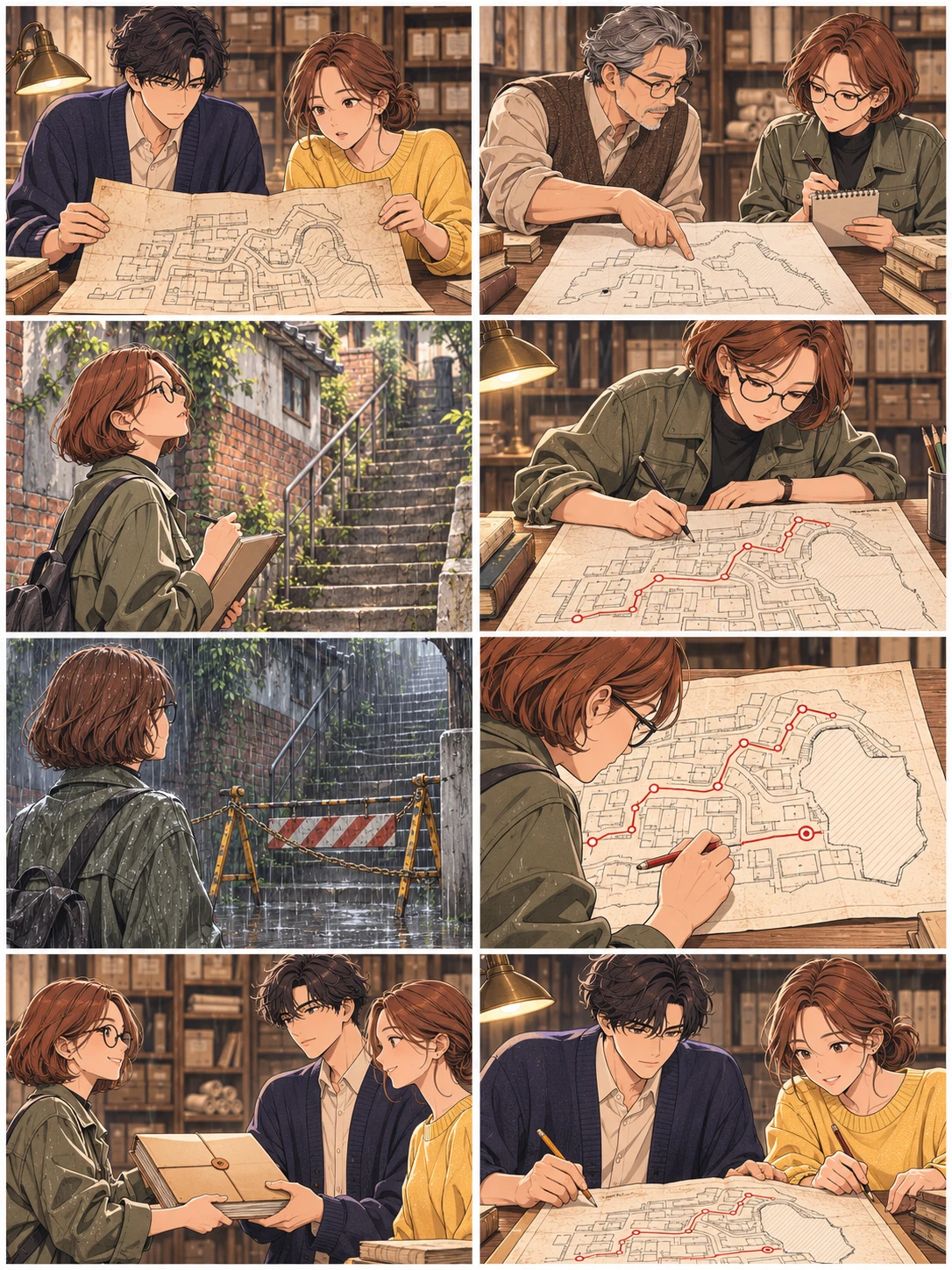
A blank on a map does not tell us there is no path there. The apprentice marked how far she had walked and left the rest unverified. Jin and Ara could see where to start without redoing the work already done. Even when we can't finish, we can leave a place for someone else to pick up.
A modern interpretation for this story
A question to take with you
If someone else were to pick up what I couldn't finish today, how would I show them what I had already checked?
Share the question together with a link to this story.
About the source and this adaptation
In the Jerusalem Talmud, Eruvin 5:1:9, Rabbi Phinehas tells of a student who spent three and a half years learning from his teacher how to extend a town's boundary for determining Sabbath travel limits. The student completed the work in Galilee but did not finish the southern region before circumstances changed. The passage gives neither an exact date nor a specific event that stopped him. The wisdom line paraphrases the ending. The rainy day, the blocked stairs, Jin and Ara, the neighborhood map, and the handover are modern fiction created with AI assistance.