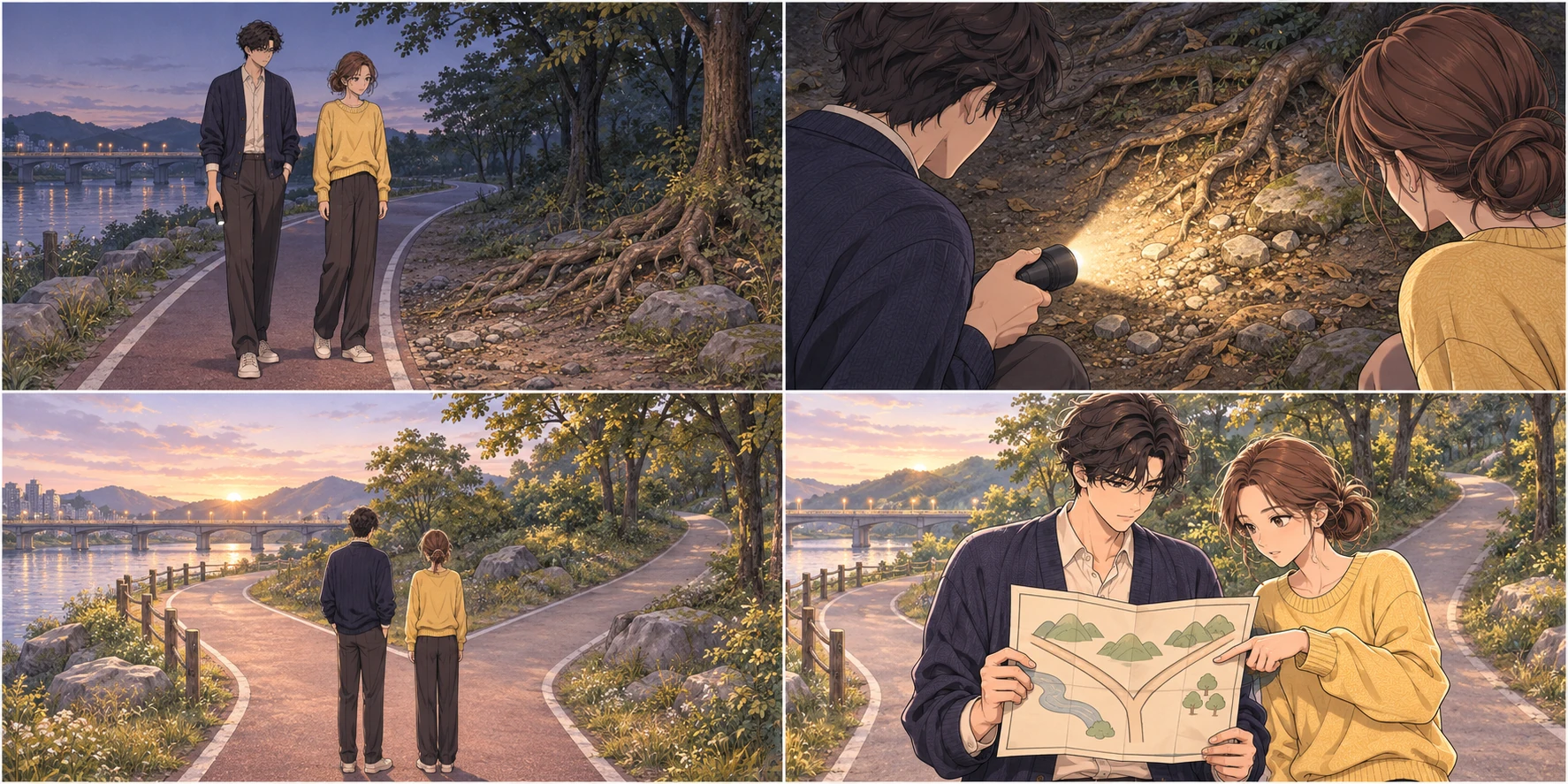
Jin and Ara used a flashlight to avoid the roots underfoot. As it grew light, they spotted the bridge they were heading for. They worked out which path led to it by matching the bend in the river to the map. The clue that helps with the next step, the clue that shows the surroundings and the clue that points the way can be different.
A modern interpretation for this story
A question to take with you
When have I needed one kind of clue to take the next step and another to decide where to go?
Share the question together with a link to this story.
About the source and this adaptation
Sotah 21a:7–8 in the Babylonian Talmud tells a parable about a traveler walking at night. The preceding passage interprets Proverbs 6:23, distinguishing the lamp of a commandment from the light of Torah. In the parable, a torch helps the traveler avoid nearby obstacles. Other dangers recede at dawn, but the way becomes clear only at the crossroads. Segment 13 offers several readings of what the crossroads mean. The wisdom line paraphrases segments 7–8. Jin, Ara, the riverside path, the flashlight, the map and the dialogue are modern fiction inspired by the parable and created with AI assistance.