A Little WisdomTalmud stories for everyday life
← All stories

094 · 12 panels

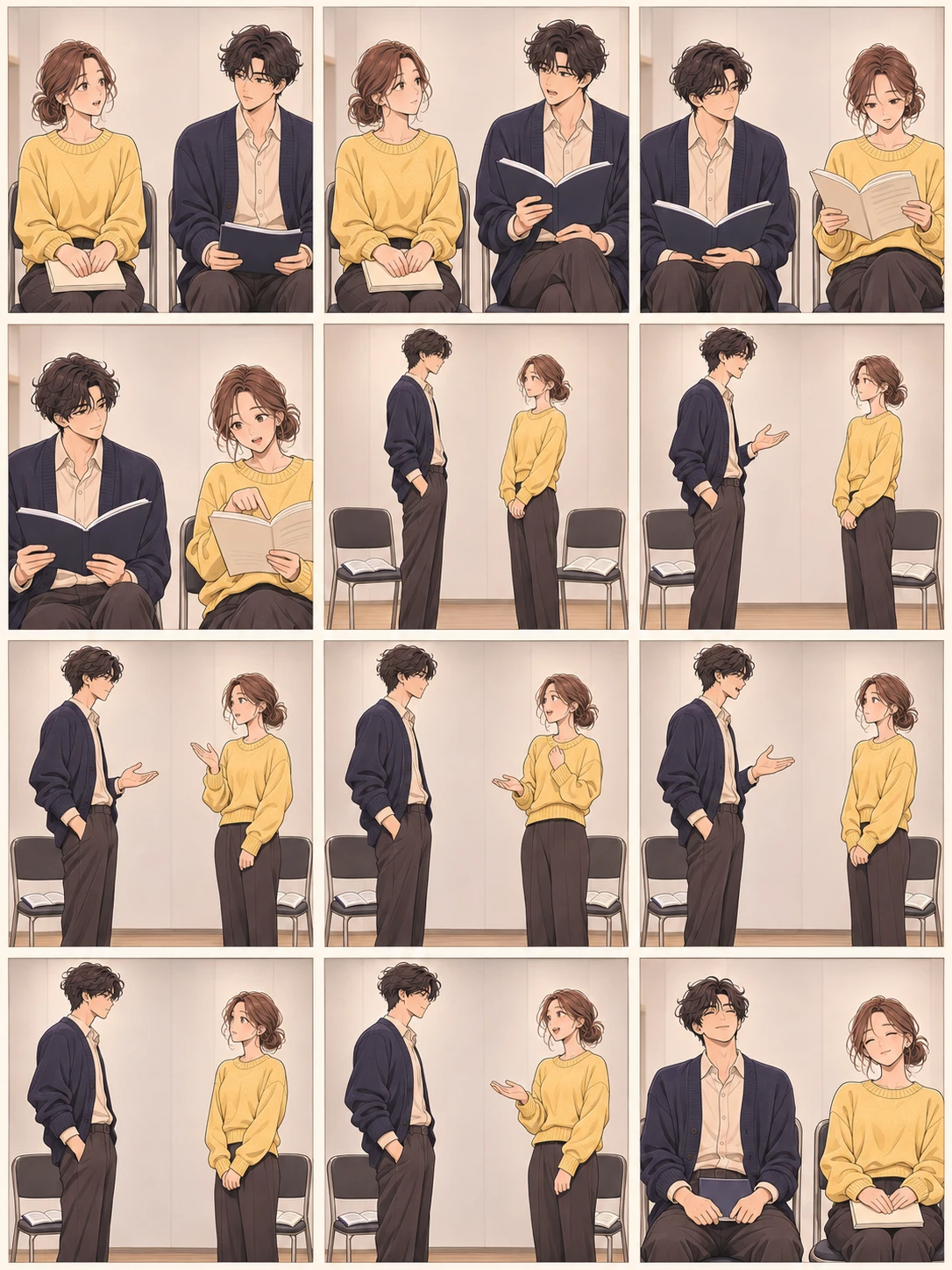
Before Closing the Script

She tried linking lines learned alone to the other person's words.

Inspired by a source · Creative adaptationNo sign-up · All stories free
Read at your own pace.
After reading her part alone, Ara closed her script.
Ara

I know the lines in this brief scene now.

After reading her part alone, Ara closed her script.

Jin asked about the difference between reading alone and exchanging lines.
Jin

Have you tried linking them with my lines too?

Jin asked about the difference between reading alone and exchanging lines.

Ara reopened her script and chose the part to look at this time.
Ara

I've read alone, but we haven't linked them together yet.

Ara reopened her script and chose the part to look at this time.

Jin nodded too. Together they agreed on the scope and the stopping point.
Ara

Let's try just this scene, then rest for today.

Jin nodded too. Together they agreed on the scope and the stopping point.

They would try linking the familiar words with a partner present.
Story

They set their scripts aside and faced each other.

They would try linking the familiar words with a partner present.

Jin began the first sentence of the scene they had created.
Jin

The rain has stopped. It's…

Jin began the first sentence of the scene they had created.

Ara started her reply too early, noticed and stopped herself.
Ara

Then we can… Oh, you haven't finished yet.

Ara started her reply too early, noticed and stopped herself.

They looked at when to speak next, without changing the words.
Ara

I was thinking only of my line and missed the end of yours.

They looked at when to speak next, without changing the words.

Jin finished the remaining part of the interrupted sentence, and Ara listened.
Jin

It's quiet outside.

Jin finished the remaining part of the interrupted sentence, and Ara listened.

She left a brief natural gap before her own sentence.
Story

After Jin finished, Ara looked at him.

She left a brief natural gap before her own sentence.

Ara gave her reply after his words, completing the brief scene.
Ara

Then let's head back at our own pace.

Ara gave her reply after his words, completing the brief scene.

One scene was what they had chosen to look at more closely. They did not immediately start the next.
Story

They closed their scripts and rested as agreed.

One scene was what they had chosen to look at more closely. They did not immediately start the next.

A thought from the Talmud

Hillel distinguishes 100 reviews from 101, comparing effort beyond the usual to a donkey driver's distance and pay.

The source idea in our own words · Not a direct quotation

Chagigah 9b:10–11 · Read the source ↗

A lesson for today

Ara looked at one different condition by linking her familiar lines with Jin's. She noticed herself rushing into her own sentence, listened to the end of his and then replied. They finished only the brief scene they had chosen and rested. This is a small modern check, separate from the source's religious comparison, not a method requiring everyone to repeat something 101 times or promising skill and success through repetition alone.

A modern interpretation for this story

A question to take with you

In something familiar, what specific small part would I freely choose to look at more closely?

Please include the source link when sharing.

If it stayed with you, support us with a follow.

Visit one of Park Seoyeon's channels. If you enjoy a post, a like or a comment is welcome too.

Park Seoyeon is an AI-created fictional character.
Visiting, signing up and following are optional. They are never required to read.

About the source and this adaptation

In Chagigah 9b:10–11, bar Hei Hei asks Hillel why Malachi 3:18 repeats righteous/wicked and serving/not serving God. Hillel says both of the latter descriptions refer to completely righteous people, yet distinguishes reviewing one's studies 100 times from 101. Asked whether one extra review warrants that distinction, he compares donkey drivers charging 1 dinar for up to 10 parasangs but 2 for 11, illustrating effort beyond the usual. This is a religious discussion and scriptural interpretation, not a learning-effect experiment or advice on modern pay contracts. The wisdom line paraphrases the exchange; it is not a direct quotation. Jin, Ara, the booklets, original fictional lines, waiting for a partner to finish, rest after one scene, dialogue and ending are AI-assisted modern fiction. The numbers are not personal moral grades, a universal 101-review prescription, guaranteed memory, skill or success, or a duty to overwork. This brief exchange is a separate modern interpretation. No existing play or lyrics are used.
Read the source ↗

AI-generated artwork · Creative adaptation

For your next little pause

The Second Box Stayed Closed →