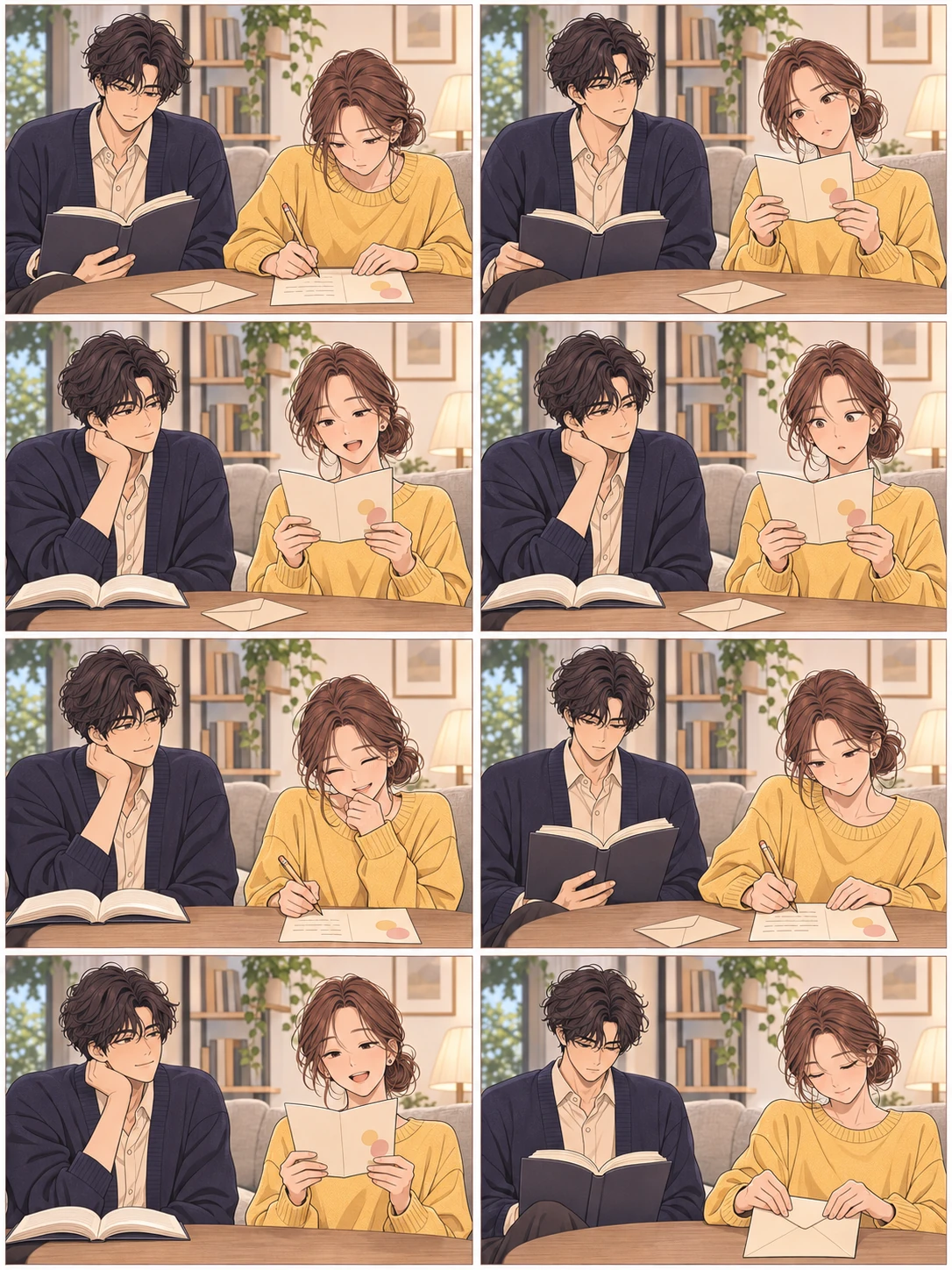
Ara reads her own draft once and notices the repeated birthday greeting herself. She replaces it with a memory of laughing with her friend, then checks whether she likes the new sentence. This is one person's chosen way of editing her writing, not a guarantee of benefits for memory, learning, or health from any reading method or volume. It does not judge people who read quietly or find speaking difficult.
A modern interpretation for this story
A question to take with you
How might I check the feeling I want to share, in a way that is comfortable for me?
Please include the source link when sharing.
If it stayed with you, support us with a follow.
Visit one of Park Seoyeon's channels. If you enjoy a post, a like or a comment is welcome too.
Park Seoyeon is an AI-created fictional character. Visiting, signing up and following are optional. They are never required to read.
In Eruvin 54a:3, Shmuel tells Rav Yehuda to open his mouth to read Torah and study Talmud, linking enduring study and long life to a biblical interpretation. Nearby, 53b:25–54a:1 depicts Berurya kicking a quietly studying student; 54a:2 tells of a student spared a punishment, and paragraphs 6–8 offer religious praise of Torah as companionship and healing. These passages are not turned into modern coercion or claims about memory, nerves, health, or voice training. The wisdom line paraphrases the advice in paragraph 3 with its speaker identified. Jin, Ara, the birthday card, noticing and revising repeated wording, and all dialogue are AI-assisted fiction. Ara voluntarily reads her own writing in an ordinary voice in this particular story. It does not mean everyone must read loudly or that a person's learning should be valued by their speaking ability.