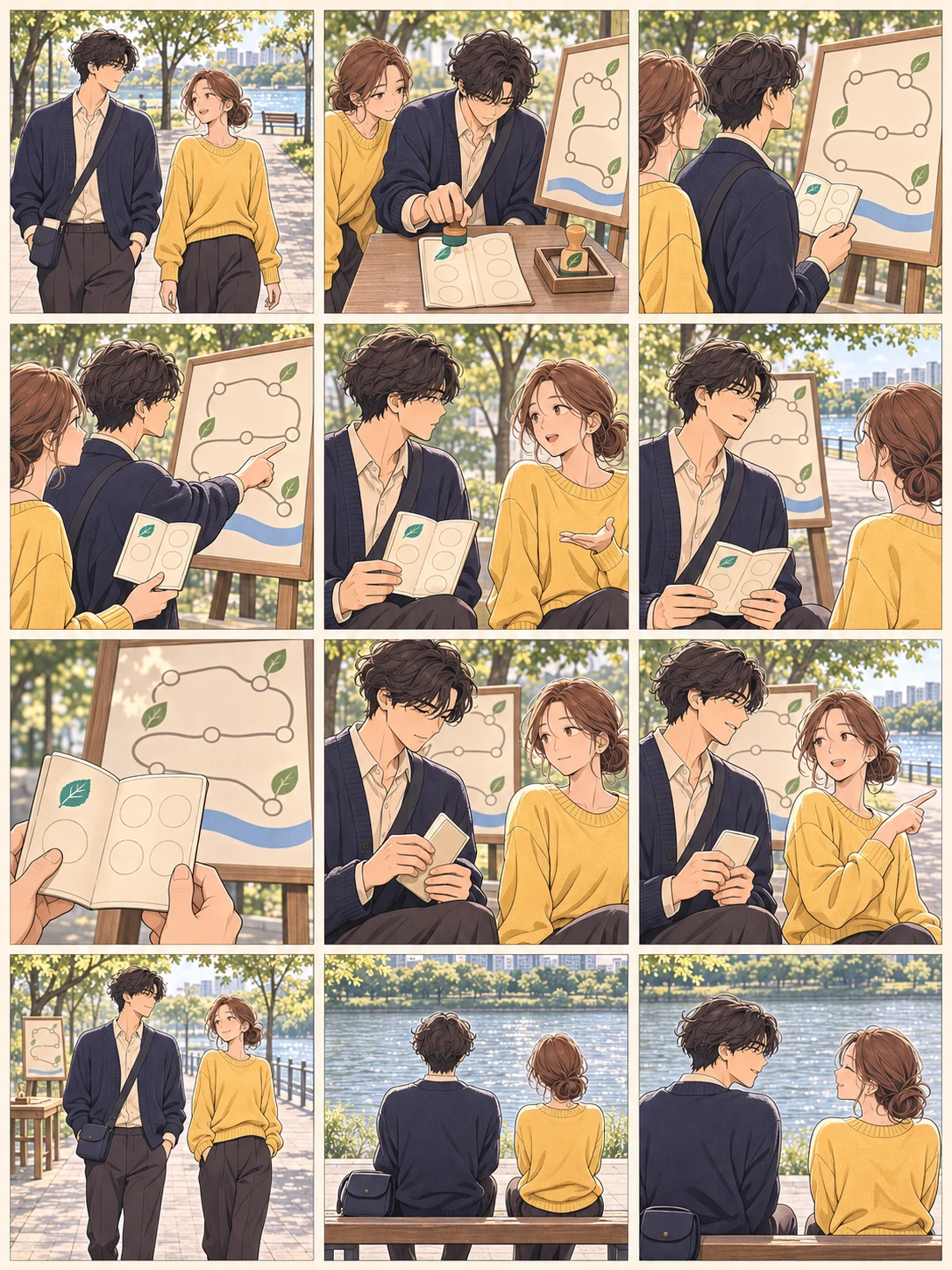
As Jin considered collecting more walk stamps, he remembered wanting to sit by the river with Ara. He freely chose to stop collecting for today, and Ara said she too wanted the river now. They actually sat on the bench and watched the ripples, leaving spaces in the booklet blank. This modern fiction is about the day these two chose together, not a judgment that collecting or traveling far is bad. Stopping does not guarantee happiness or a reward, and blank spaces do not diagnose a psychological problem.
A modern interpretation for this story
A question to take with you
Before going to collect more, what had I freely wanted to do today?
Please include the source link when sharing.
If it stayed with you, support us with a follow.
Visit one of Park Seoyeon's channels. If you enjoy a post, a like or a comment is welcome too.
Park Seoyeon is an AI-created fictional character. Visiting, signing up and following are optional. They are never required to read.
In Tamid 32a:12–32b:1, Alexander asks the Elders of the Negev how to wage war in the land called Afriki. They advise donkeys for the Mountains of Darkness and ropes for the return path, and he campaigns there. At a city inhabited only by women, he seeks battle. They challenge him through gendered shame: killing women or being killed by them would both damage his reputation. When he demands bread, they bring gold bread on a gold table and ask whether, already having bread at home, he came to increase his wealth. The account then says he recorded on a city gate that he had learned wisdom from women. The continuous Creation questions, dispute about Jewish life and royal power, execution threat, campaign and return in 31b:15–32b:1 count as one source unit, not separate episodes for each question. The spring/Garden of Eden/eyeball tradition at 32b:2–4 is not used. The wisdom line paraphrases 32b:1; it is not a direct quotation. This tradition is not treated as proof of historical conquests, gender superiority or justification for killing and coercion. Jin, Ara, the invented walk-stamp activity, booklet, river bench, choices, dialogue and ending are AI-assisted modern fiction. It does not turn abandoning a campaign into a reward rule, condemn collecting or travel generally, or promise success through forced self-improvement.