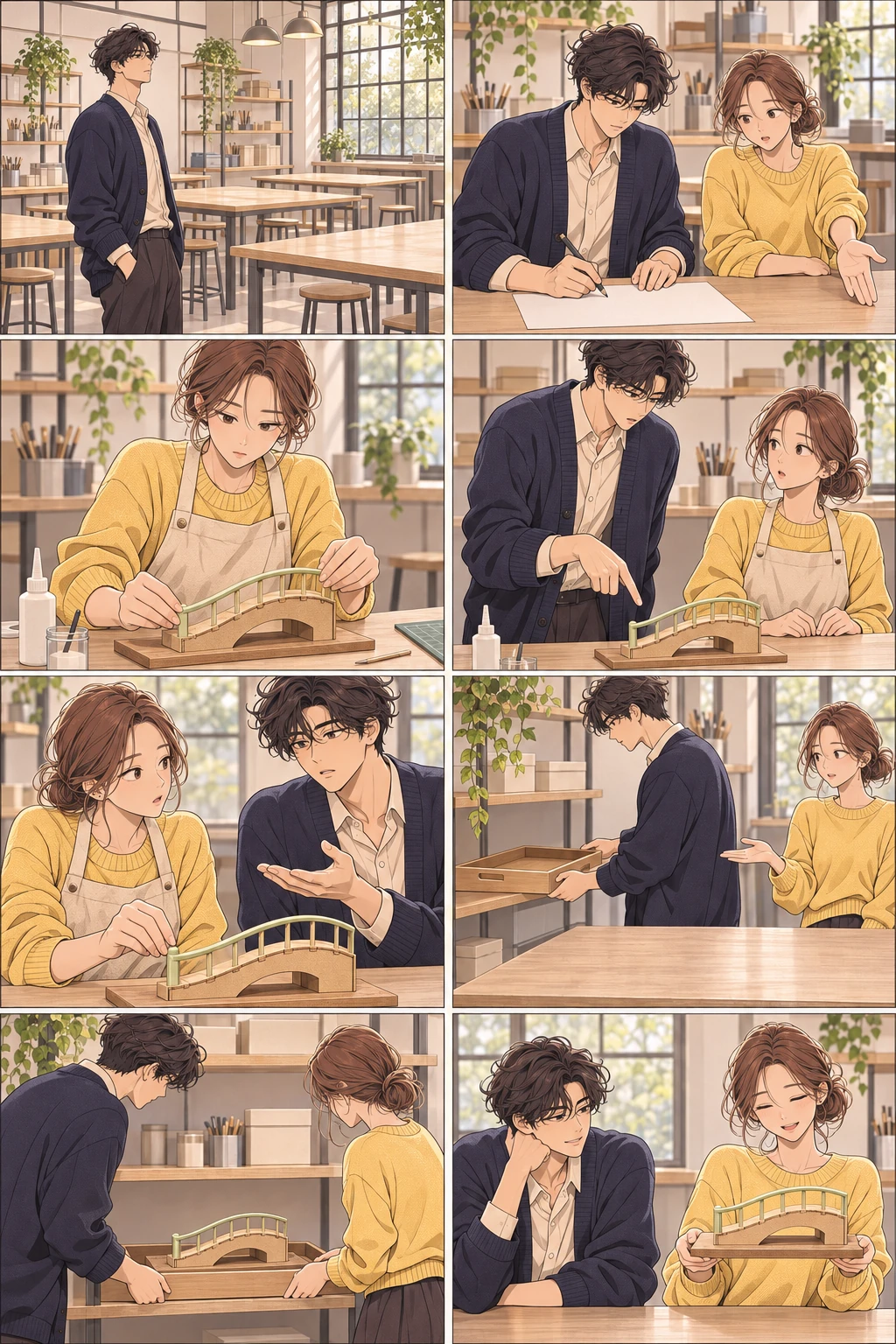
Looking at an empty table, Jin had imagined how everyone could tidy up at closing. He hadn't considered projects that would still be drying. When Ara showed him the loose railing, they made space on a side shelf for the whole base. The next person still had a clear table, and Ara could pick up where she left off. Seeing what people are actually doing can reveal a different way to reach the same goal.
A modern interpretation for this story
A question to take with you
What situation might I have missed by leaving out the people who use a rule I made?
Please include the source link when sharing.
If it stayed with you, support us with a follow.
Visit one of Park Seoyeon's channels. If you enjoy a post, a like or a comment is welcome too.
Park Seoyeon is an AI-created fictional character. Visiting, signing up and following are optional. They are never required to read.
In Shabbat 88b:7–8, Rabbi Yehoshua ben Levi recounts how the angels questioned Moses' presence when he ascended to receive the Torah. God tells Moses to respond, and Moses brings up its commandments one by one. In 89a:1 he asks, among other things, whether the angels work and need rest or have parents. They agree with God's decision. In 89a:2 the angels give Moses gifts. The wisdom line paraphrases this passage. Jin, Ara, the shared workshop, the model, the shelf, the dialogue and the ending are AI-assisted modern fiction inspired by the debate.