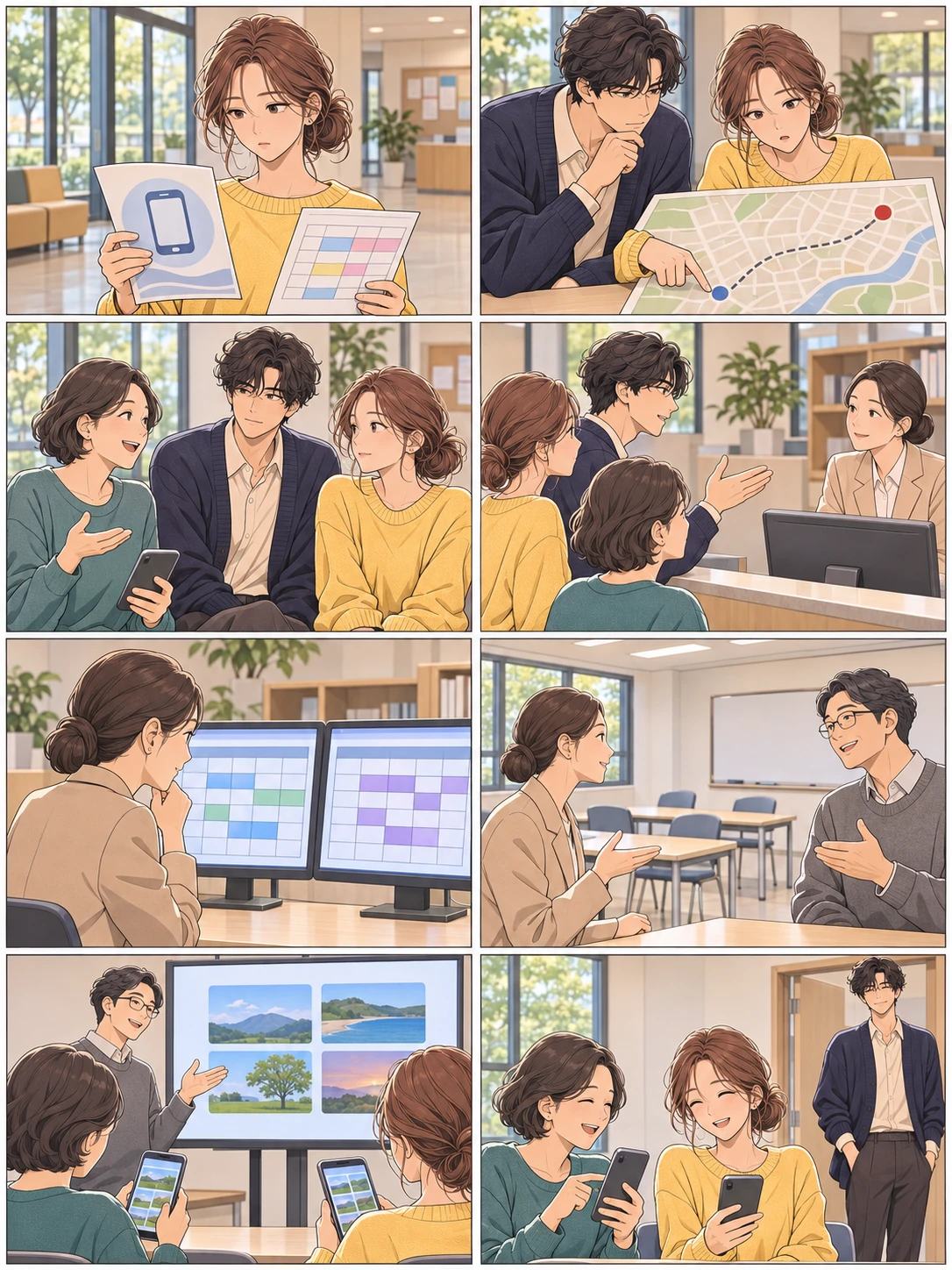
Even someone ready to enroll may find travel to a distant location a barrier. After hearing a colleague's interest, the two asked the coordinator about a local class. The coordinator checked an authorized room and an instructor's availability, and the class actually opened. This is one example of bringing a location closer, not a claim that every access problem has been solved.
A modern interpretation for this story
A question to take with you
If someone wants to learn but cannot easily get there, could we also examine where learning takes place?
Please include the source link when sharing.
If it stayed with you, support us with a follow.
Visit one of Park Seoyeon's channels. If you enjoy a post, a like or a comment is welcome too.
Park Seoyeon is an AI-created fictional character. Visiting, signing up and following are optional. They are never required to read.
Bava Batra 21a:2–4 recounts that Torah learning initially depended on help within the family. Establishing teachers in Jerusalem and then regional centers still left barriers, and Yehoshua ben Gamla arranged teachers in provinces and towns. It is an ancient institutional narrative about sustaining children's religious learning. This adult beginner-class story uses a separate modern interpretation about distance to a place of learning. Jin, Ara, the colleague, coordinator, instructor, classroom, phone class and all dialogue are fictional, not an announcement of a real course. The original's ages, class arrangements and religious distinctions are not presented as modern law or definitive child-development guidance.